

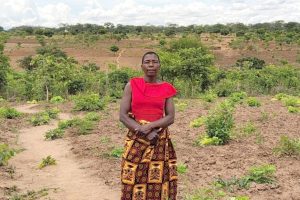
Merina Banda stands at the edge of her field on the outskirts of Kasungu National Park and listens. She has lived here all her life. At 54 she knows the sound of an elephant moving through the bush better than most people know the sound of rain on a tin roof.
For years those sounds meant broken fences, flattened crops and the constant fear that her children or grandchildren might meet a bull on the path home after sunset.
“We used to sleep with one eye open,” she says. “When the elephants came into the gardens at night, we would shout and bang pots. Sometimes it worked. Sometimes it did not. People lost food. Some lost more than food.”
This dry season the story is different. As part of the 2026 Joint Ecological Monitoring Exercise, running from 5 to 31 October, teams have been fitting tracking collars on elephants. By 6 October 15 animals had already received new collars.
The work is led by the Department of National Parks and Wildlife with support from the International Fund for Animal Welfare, the Conservation Ecology Research Unit of the University of Pretoria and Mhuirich Aviation Services.
Banda heard about it on the radio, then saw the planes and the helicopter. She walked to the nearest ranger post to ask what it meant for people like her.
According to game ranger Ivy Kadaya, the answer is practical. The collars feed live location data into the EarthRanger system. Virtual boundaries known as geofences, set near the park boundary, trigger SMS alerts when collared elephants approach or cross them. Those alerts allow rangers and department officers to locate the animals and respond before they reach nearby fields.
This early-warning approach sits squarely within the purposes of the National Parks and Wildlife Act, which includes the minimisation of conflict between human beings and animals, and aligns with the National Wildlife Policy of 2018 that prioritises reducing human-wildlife conflict through practical measures such as fencing, monitoring and rapid response.

Inside the park’s Operations Complex, Kadaya and fellow officer Mary Mchakulu help monitor elephant movements and coordinate patrols around the clock. When an animal remains stationary for an extended period, rangers are sent to investigate.
The team also watches elephants approaching the boundary so that response teams can act before the animals stray into community areas. The same technology tracks the rangers themselves: their Garmin GPS devices transmit location data that appears on the EarthRanger screens, allowing the control room to see which areas are being covered and to redirect teams when necessary.
The system therefore serves two connected purposes helping rangers respond to elephants that may threaten nearby communities and improving the coordination of patrols tasked with protecting wildlife. It also supports monitoring of the elephants brought from Liwonde National Park in 2022.
Tourism Minister Simon Itaye watched one of the collaring sessions. He said the tracking was important for three reasons: it follows the elephants moved from Liwonde and those already living in Kasungu; it builds knowledge of elephant behaviour for research; and, most urgently for people living next to the park, it provides early warning when animals approach or leave the protected area.
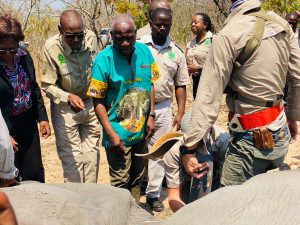
“With the collaring they will be able to follow the elephants and have preventive measures before the elephants go into the villages and start destroying either crops or having some accidents, killing people,” Itaye said.
Bruce Sosola, country director for IFAW in Malawi, places the work in a wider frame. IFAW has worked with the Department of National Parks and Wildlife since a memorandum of understanding was signed in 2018 and supports the spirit of the Transfrontier Conservation Area agreement between Malawi and Zambia, signed in 2015.
The goal is to give elephants room to move safely between Kasungu and protected areas across the border while reducing the threats they face. Such landscape-level efforts contribute directly to Sustainable Development Goal 15, Life on Land by helping to protect, restore and promote the sustainable use of terrestrial ecosystems and halt biodiversity loss.

“Tracking data helps the department monitor the elephants around the clock,” Sosola said. “It provides the information needed for long-term management of the park and the surrounding community areas.”
Human–elephant conflict incidents recorded in Traditional Authorities around Kasungu National Park have fallen sharply, from 690 cases in 2022 to 94 in 2025. In 2024 there were 414 recorded incidents of elephants straying out of the park, a 40 percent drop from the 697 cases recorded in 2023. More than 133 kilometres of fencing now stand along the eastern boundary, forming part of a wider effort that also includes rapid-response teams equipped to act on alerts.
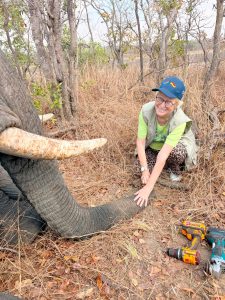
The collars themselves last roughly four years before their batteries fail or the animals outgrow them. That is why the team returned this season. Specialists dart the elephants, fit or remove the collars, and stay with each animal until it stands up and rejoins its group. An aerial count of the wider population is under way; ground surveys by scientists based in the park will complete the picture. The previous full aerial assessment was carried out in 2022.
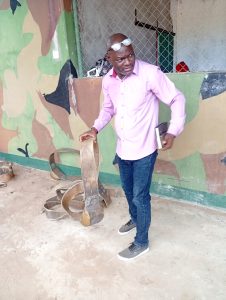
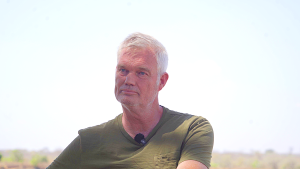
Dr Robert Guldemond of the University of Pretoria’s Conservation Ecology Research Unit has been involved since discussions began in 2018. His team runs three linked programmes: full-area counts to track overall numbers, a rapid elephant population assessment that looks at age structure and breeding, and detailed studies of movement and social behaviour.
“We are learning what happens after translocation,” he explained. “How the animals explore new habitat, how they interact with resident elephants, and what they do when they move beyond the park boundaries. That knowledge helps park managers decide where to put effort and when to leave the animals alone.”
German Ambassador to Malawi Ute König visited the park a day after the minister. She lauded the focus on community safety and expressed hope that continued support from IFAW would strengthen both conservation efforts and the electric fence that already runs along parts of the boundary.
“So for me to ride in a helicopter and see how the expert vet was darting the elephant so that it fell asleep, of course, was an amazing experience,” she said. “Then they asked me to come down and hold the elephant’s trunk, because it’s very important while the elephant is asleep that he continues to breathe, otherwise it could be fatal for him. He was still awake, so he was looking at me and I was holding his trunk. This is something you will never forget in your whole life.”
For Banda the technical details matter less than the change she can already feel. In previous years her family lost large sections of maize. This year the early warnings have kept the herds away from the fields nearest her home. She still keeps a careful watch, but the nights are quieter now.
Reduced crop losses of this kind strengthen household food security and help build the resilient livelihoods that Malawi 2063 seeks under its Agricultural Productivity and Commercialisation pillar and its Environmental Sustainability enabler.
The same work is meant to help the park attract more visitors. Better knowledge of elephant numbers and movements supports tourism planning. New chalets are under construction and roads leading to Kasungu are being improved; travel times that once stretched past two and a half hours should drop within the next year.
A more attractive, accessible Kasungu contributes to the Urbanisation pillar of Malawi 2063, which envisages world-class tourism hubs as part of an inclusively wealthy and self-reliant nation.
Banda does not talk much about tourism numbers. She talks about the children who can walk to school without the same fear, about the chance to harvest a full crop, and about the quiet hope that elephants and people can share the land without constant conflict.

The collars will keep sending data for the next four years. Researchers will keep analysing it. The rangers will keep watching the screens. And on the edge of the park, a woman who has lived with elephants all her life will keep listening for the difference between a distant herd and one that is coming too close.
That difference, measured in real time and acted on before damage is done, is what the collars are for.
#MBCDigital
#Manthu
