


At Zingwangwa Township in Blantyre City, a powerful drug is making its way into local shabeens, where some users say it is replacing alcohol and marijuana as their preferred stimulant.
This is called ‘M’buka’ and it resembles Methamphetamine.
According to the Chemical Entities of Biological Interest (ChEBI), methamphetamine is a psychostimulant in the amphetamine family that stimulates the central nervous system and suppresses appetite.
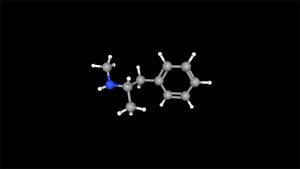
It looks like white shiny crystals, and when bought, it comes wrapped in a small plastic bag.
Agatha Banda (not her real name), a 20-year-old user, says m’buka has become her preferred substance because it gives her a feeling of being “awake”.
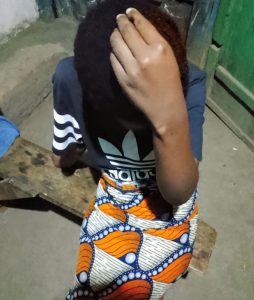
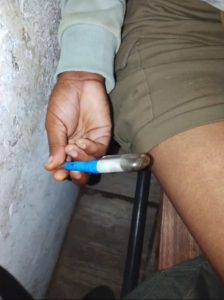
She smokes the drug using a homemade bong made from an energy-saving bulb and a pen case, all fused together with a thin plastic.
This reporter went undercover and Agatha demonstrated how she heated the device with a lighter and inhaled the smoke after the crystals melted into a dark liquid.
Scientific literature from the National Library of Medicine indicates that methamphetamine melts at about 170–172°C and may release nitric oxides when heated.
“If I smoke it, I do not sleep or feel hungry. This is better than kachasu, or chamba (marijuana),” she said.
Agatha’s account corresponds with scientific literature.
ChEBI lists appetite suppression, central nervous system stimulation and increased sympathetic activity among methamphetamine’s recognised physiological effects.
At Zingwangwa Market, users interviewed by MBC Digital claimed the drug sells for between K2,000 and K6,000, depending on whether the smoking device is included.
Nonetheless, MBC Digital could not independently verify the prices.
One user, who asked not to be named, said the low cost and the desire to escape daily struggles have contributed to its appeal.
“What can I do if I want to get high? It is cheap,” he said.
A local supplier, who also uses the drug and requested anonymity, claimed the substance has become a source of income for him.
“However, I cannot tell you where I get it or how it is produced because I procure it from someone in Limbe,” he said.

He claimed that he makes around K55,000 or more per day, although MBC Digital could not independently verify the claim.
A former user, who said we should name him ‘Jabesi’ said he had quit after getting high all night and failing to sleep.
“Amwene zinandipweteka kwa usiku onse. Njala sinandipeze kwa masiku awiri, ndinasiyira pomwepo. (I got high the whole night and I did not experience hunger for two straight days),” Jabesi said.
Mental Health Clinician at the Zomba Mental Health Hospital, Harry Kawiya, confirmed that the chemical elements in the drug are likely to cause such symptoms.
Kawiya said it produces a lot of dopamine and psychosis, which can lead to hallucinations and then aggression.
According to him, it also causes dental problems, skin rashes, weight loss because the user does not eat regularly, and an increased heart rate, leading to heart failure.
“Some of them develop anxiety disorders. The challenge is that people are not honest about this, maybe for fear of being stigmatised. But perhaps, we might have more as long as they open up,” he said.
He confirmed that the hospital has a patient who is being treated from the drug’s effects.
However, the police said they are yet to arrest suppliers, or launch investigations into the current use of the drug.
Deputy Public Relations Officer for the South West Region Police Headquarters, Andrew Kingston Mayawo, said police had received reports of methamphetamine use in some communities, including Ndirande Township in Blantyre.
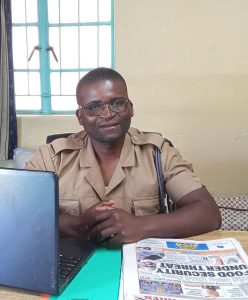
Mayawo said the reports were raised during engagements with community policing members and traditional leaders, who claimed that some youths, including secondary school students, were using the substance.
“As police, we are aware that a new drug has emerged in our communities. I should say that when handling our cases, to do with the behaviour of children in our homes, through the Victim Support Unit, the name ‘M’buka’ comes up. At the moment, we do not have full details about how this drug is found,” he said.
Mayawo added that this has since spiked their interest.
“You should give us more time, and now that the media is interested, it means we should give it much attention and how we can stop this,” Mayawo said.
Given its long-term health effects, can methamphetamine addiction and its complications be treated?
Kawiya believes so.
“Those who develop psychosis need special medication and societal support. Because the long-term effects of this are dependency and sometimes forgetfulness,” he said.
“We cannot run away from the fact that this is a public health problem because the majority of the users are the youth, so if they struggle with this, their futures might be harmed,” Kawiya said.
For specialised treatment, Malawi has three main psychiatric referral facilities providing inpatient and outpatient care: Zomba Mental Hospital in the Southern Region, and Saint John of God Hospitaller Services in Lilongwe and Mzuzu.
Executive Director for Drug Fight Malawi, Nelson Zakeyu, said methamphetamine should be viewed as part of a broader national drug challenge.

“We need to be serious because drug use is a developmental issue. Those who are addicted may not contribute effectively to the development of this country,” he said,
Zakeyo said methamphetamine is one of several drugs affecting young people and described it as highly addictive, warning that some users develop dependency soon after experimenting with it.
Zakeyo said while “M’buka” is a new street name associated with methamphetamine, users often adopt different names depending on the area.
“I am really sure that meth might be renamed differently in different areas, and I am also sure that, probably, since it is a new phenomenon, young users in educational institutions mix these drugs.”
He said Malawi still needs stronger policy measures to tackle drug abuse, noting that the country has yet to adopt a national drug control policy.
“We have been working with the government, through the Ministry of Homeland Security, where, for a number of years now, we have been involved in the development of the national drug control policy, but this is still in its draft form and has not been approved,” Zakeyu said.
While police say they are still gathering information about methamphetamine use, Zakeyo believes Malawi has structures capable of responding to the problem if stakeholders work together.
“Malawi is well prepared to deal with this. Already when the government was drafting this policy, we can see the political will that is there,” he said.
Zakeyo, however, said preventing methamphetamine from entering Malawi remains a challenge because of porous borders and multiple trafficking routes.
He also warned youths, the common users, to take responsibility for their health.
“In Chichewa, we say ‘phukusi la moyo sakusungira ndi mzako’ (no one keeps life apart from yourself). Even if we share this information with the youths, if they are careless and do not understand the truth about drugs, they themselves have to be able to protect their own lives individually,” he warned.
Zakeyo also urged parents, teachers, religious leaders and traditional authorities to identify early warning signs and intervene before addiction takes hold.
“Leaders have a responsibility that youths are protected from the use of drugs through information sharing and also to provide treatment and have rehabilitation centres. It is high time that we should not only rely on Zomba Mental Hospital, but we need to have the centres throughout the country,” he said.
The World Health Organisation classifies such a drug as a highly addictive Amphetamine-Type Stimulant (ATS) controlled under the 1971 Convention on Psychotropic Substances.
