


The morning sun is now shining fiercely in Nyenyezi Village, Traditional Authority (T/A) Bwananyambi in Mangochi, but Alumbedye Imedi is still in the field, busy harvesting green maize.
Beads of sweat run down her face, yet she continues to work with a smile.
Just a few years ago, this patch of land lay dry and unproductive for months, waiting for the rains that often came late or failed entirely.
Today, a small solar pump quietly draws water from a nearby river, pushing it through black irrigation pipes that snake across the field. The maize is tall, the vegetables vibrant, and the soil moist, even in the heart of the dry season.
“Nyenyezi Irrigation Scheme demystifies the belief that people in Mangochi rely only on fishing.
“All we need are such interventions to push us forward. Most of us accessed National Economic Empowerment Fund (NEEF) loans when we first grew crops, but we are now able to stand on our own after selling our commodities and making meaningful profits,” says Imedi, pausing to wipe her hands.
She is one of over 5,000 households (about 25,000 people) whose lives have been transformed by 23 newly constructed solar-powered irrigation schemes in Mangochi and Zomba districts.
The Schemes have now been handed over to government to be used by communities in the two districts.
The schemes, 15 in Mangochi and 9 in Zomba, were constructed under CARE Malawi’s Titukulane Project with support from the United States government.
Covering nearly 300 hectares, they enable farmers to grow three crops per year, drastically reducing reliance on unpredictable rainfall and protecting livelihoods from climate shocks.
For farmers who have long battled hunger and poverty, this is more than just a technology upgrade. It is a lifeline, from struggles to stabilities.
At the official handover ceremony held at Nyenyezi Irrigation Scheme in the area, Minister of Agriculture Sam Kawale said the schemes show what is possible when government, communities, and development partners work together.
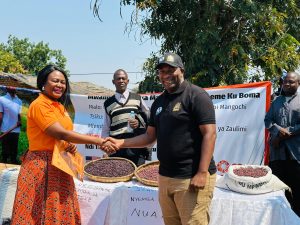
“The fields of Malawi need the sweat of farmers and the overflowing of irrigation water. Irrigation is the bridge between Malawian farmers’ struggles and abundant productivity. Investing in irrigation is investing in stability,” Kawale told the gathering.
He stressed that for districts like Mangochi and Zomba, where erratic rainfall and prolonged dry spells have become the norm, irrigation development is no longer optional but essential.
The solar irrigation schemes are not isolated community projects.
They are part of a bigger national and global vision and go in line with Sustainable Development Goal (SDG) 2 (Zero Hunger) that ensures year-round food production, SDG 1 (No Poverty) that enables farmers to earn income from surplus sales.
It is also in line with SDG 13 (Climate Action) that ensures renewable energy instead of diesel-powered pumps.
Nationally, it directly advances Malawi 2063’s Pillar Number One (Agricultural Productivity and Commercialization), which aims to transform farming from subsistence to profitable agribusiness, reduce dependence on food imports, and make agriculture a driver of national prosperity.

According to CARE Malawi Country Director Pamera Kuwali, the benefits stretch far beyond what ends up on the dinner table.
“Farmers are not only producing crops year-round, but they are also sending their children to school, improving household incomes, and making life-changing investments such as purchasing motorbikes,” she said.
Schemes like Ntaka, Ngwirizano, and Tigwirizane in Zomba have become hubs for community empowerment.
Farmers are learning modern cultivation techniques, pooling resources in cooperatives, and exploring agribusiness ventures — from small-scale processing to bulk selling in distant markets.
But why has solar energy changed everything?
In the past, many irrigation schemes in Malawi relied on diesel-powered pumps, which were expensive to operate and environmentally unsustainable. Solar technology changes that reality.
Lower operating costs mean farmers keep more of their earnings.
Reliable water supply allows for planting schedules that are independent of the rainy season.
Renewable energy use aligns with Malawi’s climate commitments, reducing greenhouse gas emissions.
For communities without access to the national power grid, solar-powered irrigation is not just an alternative; it’s the only viable path to sustained production.
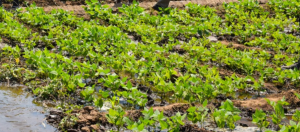
In the green rows of Nyenyezi, it is easy to see that this is more than an agricultural project — it’s a social and economic shift.
Farmers who once depended on food aid during lean months are now business-minded producers, negotiating prices at local markets and supplying vegetables to schools, hospitals, and trading centres.
The journey is far from over. Malawi still faces the challenge of expanding such schemes to more communities, ensuring maintenance support, and linking farmers to better markets.
But the seeds of self-reliance have been planted.
As the sun sets over Nyenyezi, the solar panels glisten – silent sentinels of a new chapter in Malawi’s agricultural story.
The hum of the irrigation pump fades as Imedi and her neighbours carry baskets of freshly harvested produce home.
For them, this is not just food for today, it’s a vision for tomorrow. A vision where SDG 2 (Zero Hunger) is more than a target, and where MW2063’s dream of a wealthy and self-reliant nation grows not in boardrooms, but in the soil under their feet.
For the first time in many years, that dream feels within reach.
