


The Department of Mining has called on journalists to improve accuracy in reporting on the sector, noting that mining is expected to play a central role in Malawi’s long-term economic transformation.
The call came during a day-long training for members of the Association of Business Journalists (ABJ) in Lilongwe, where officials said stronger understanding of the industry would help curb misinformation, improve public accountability and strengthen reporting on a sector undergoing policy reforms.
Officials said mining currently contributes between 1 and 2 percent of Malawi’s Gross Domestic Product (GDP), well below its long-term potential as government seeks to expand production and formalise operations.
Director of Administration in the Department of Mining, Martin Nkasala, said accurate use of technical language remains key to transparency in how mining revenues are understood and reported.
“It is good to know and understand the terminologies when reporting, to ensure that revenues generated from the mining sector are used for their intended purpose,” he said.
On environmental regulation, Chief Inspector of Environment, Mphatso Chikoti, said mining projects must comply with legal safeguards before licences are issued, stressing that environmental approval is a mandatory step in the process.
“The Environmental Management Act is also critical because mining activities inevitably affect the environment. Before a company is granted a mining or exploration licence, it must first obtain environmental approval from the Malawi Environmental Protection Authority,” he said.
Turning to media capacity, Vice National Coordinator of the Association of Business Journalists, Alex Banda, said the training was designed to strengthen journalists’ ability to interpret complex mining issues and communicate them clearly to the public.
“The goal is to give journalists tools to ask informed questions and explain technical issues clearly to the public,” he said.
At technical level, Mining Surveyor at the Department of Mines, Hillary Bandawe, warned that gaps in understanding geological concepts often lead to misleading reporting on the sector.
“Minerals are just simply combinations in a crystalline nature,” he said, adding that reporters must distinguish between mineral occurrences, resources and reserves.
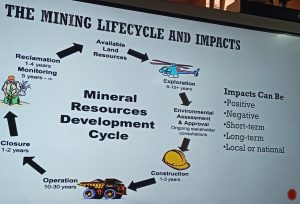
He added that studies indicate Malawi could generate over US$500 million annually from the mining sector once key projects are fully developed and operational.
On access to information, facilitator Golden Matonga urged journalists to rely on formal legal channels when seeking data from institutions, particularly Access to Information (ATI) requests.
“ATI requests guarantee a response but require waiting for up to 15 days before further action can be taken,” he said.
He added that mining remains a technically complex and often opaque sector, making verification from multiple sources essential for accurate reporting.
Government maintains that mining is expected to significantly increase its contribution to GDP to at least 10 per cent by 2030 as reforms continue and new projects come on stream.
#MBCDigital
#Manthu
