


Stepa model farm at Malingunde in Sub T/A Kachule’s area in Lilongwe is demonstrating how degraded land can be transformed into productive and climate-resilient landscapes through practical restoration and community participation.
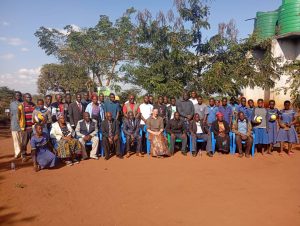
The farm, which was established by the Centre for Applied Systems Analysis (CASA), brought together farmers, traditional leaders, students, extension workers and development partners to showcase innovative land restoration and sustainable agriculture interventions.
Speaking during the open day, Chief Executive Officer for CASA Dr. Steve Makungwa, said under the project “Upscaling Forest Landscape Restoration through Field-Based Capacity Development in Malawi,” they are providing farmers with knowledge on integrated farming systems that can improve productivity while protecting the environment.
“We established this farm to demonstrate practical land conservation measures that communities can easily adopt. Through hands-on learning, farmers are gaining skills in soil management, water harvesting and moisture retention, which are critical in building resilience against climate change,” he said.
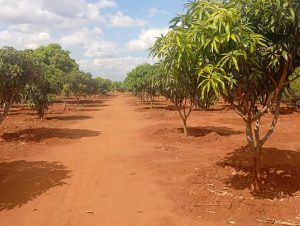
The farm features a range of restoration interventions including agroforestry, orchard establishment, plantation forestry, irrigation-supported farming, beekeeping, tree nursery development and soil and water conservation technologies.
CASA is implementing these interventions with funding from the Fondation Audemars- Watkins, a Geneva based organization through the International Union of Forest Research Organizations Special Programme for Development of Capacities (IUFRO- SPDC) .
Janice Burns coordinator for the IUFRO- SPDC said her organisation initiated a mentorship programme in Malawi to equip communities with practical skills for restoring degraded landscapes.
Burns has since expressed satisfaction with the progress being made at the model farm, describing it as evidence that landscape restoration can deliver tangible benefits to local communities.
“We started this programme to mentor people on practical approaches for restoring degraded landscapes, and it is encouraging to see the results on the ground. What we have witnessed here demonstrates that it is possible to restore land and create productive landscapes that improve livelihoods for communities,” she said.
Village Headwoman Chiputu, who also serves as farm manager at the farm, hailed the initiative, saying it has become a valuable resource for surrounding communities.
“As a community leader, I have seen the positive impact this farm is making. Farmers are learning modern soil conservation techniques and are becoming more aware of the importance of restoring degraded land. The farm has brought new opportunities for learning and improving livelihoods,” she said.
The Stepa open day showcased practical demonstrations in banana production, mango orchards, beekeeping, plantation forestry, irrigation farming and other climate-smart agriculture technologies aimed at restoring degraded agricultural landscapes and improving rural livelihoods.
