


At Dzaleka Refugee Camp in Dowa, hunger is no longer simply a consequence of displacement.
It is becoming the defining reality for thousands of refugees following the suspension of food assistance by the World Food Programme (WFP) and looming cuts to humanitarian services caused by a worsening global funding crisis.
As food assistance disappears and humanitarian agencies struggle with shrinking budgets, residents fear they are witnessing not just a funding crisis, but the gradual erosion of the protection, dignity and opportunities that have sustained them through years of displacement.
For many of the nearly 56,000 refugees living in the camp, the loss of food support has already pushed families into desperate survival strategies. Residents say vulnerable households are skipping meals, exchanging personal belongings for food and in some cases, turning to risky and exploitative means of survival.
Jennifer Mukhayamana, a refugee living in the camp, said the food assistance had been a lifeline for families with no reliable source of income.
“The support was helping many vulnerable families feed their children. Without it, life has become extremely difficult,” she said.
Another resident, Innocent Rashid, said desperation is increasingly exposing women and girls to exploitation.
“Young girls are increasingly engaging in prostitution because they need money which they cannot easily find through proper means,” said Rashid.
He appealed to authorities to allow refugees greater freedom of movement and access to employment opportunities outside the camp, arguing that many residents possess valuable skills that could help them earn a living and reduce dependence on aid.
The worsening conditions come as the United Nations warns of significant reductions in humanitarian funding worldwide.
Speaking in Lilongwe recently, United Nations Resident Coordinator Rebecca Adda-Dontoh announced that a deepening global financial crisis is forcing UN agencies, including the United Nations High Commissioner for Refugees (UNHCR), to scale down operations and reduce field presence.
According to Adda-Dontoh, UNHCR is expected to lose nearly 30 percent of its funding, raising fears that essential services for refugees could be severely affected.
Inside Dzaleka, organisations working directly with refugees warn that the consequences could extend far beyond food shortages.
Executive Director of Women Palm Tree Organisation, Kahozi wa Kahozi Serge, said programmes aimed at protecting women and girls from gender-based violence could suffer major setbacks.
“Women and girls who need protection, counselling and awareness services may not receive enough support because of limited resources,” he said, adding that single mothers are likely to be among the hardest hit.
What began as a shortage of food is rapidly evolving into a crisis of survival itself.

For Francina, another resident of the camp, the effects of hunger are already visible. She said children are increasingly being accused of theft as families struggle to find food.
“People are now exchanging different items, including clothes, for food because of hunger. We are worried that eventually we may lose all our belongings just to get something to eat,” she said.
She also expressed concern over a growing trend of vulnerable people entering exploitative relationships in exchange for money and basic necessities.
Data from Dowa Police Publicist Alice Sitima, has revealed that as of May this year, four people have been arrested in Dzaleka for cases of defilement.
The funding squeeze is also threatening legal aid and protection services. Chief Executive Officer of Inua Advocacy, Innocent Magambi, warned that organisations supporting refugees’ rights are already being forced to reduce costs and cut staff.
“For organisations like ours, the aid cut affects our ability to respond to human rights violations and provide legal assistance,” Magambi said.
Human rights defender Michael Kaiyatsa cautioned that worsening living conditions could trigger broader social problems.

“Limited funding could force some people into negative coping mechanisms, which may increase crime within the camp,” he said.
Kaiyatsa further argued that the international community is failing countries such as Malawi, which continue to shoulder the responsibility of hosting refugees despite refugee protection being a shared global obligation.
Meanwhile, Minister of Homeland Security Peter Mukhito acknowledged the pressure created by rising numbers of refugees and asylum seekers entering Malawi.
He said government remains committed to working with partners to sustain key services and strengthen cooperation with organisations such as the International Organization for Migration.
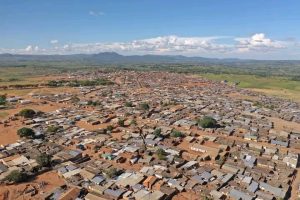
Dzaleka Refugee Camp was established in 1994 by the Government of Malawi and UNHCR. The camp was originally designed to accommodate between 10,000 and 12,000 refugees.
However, over the years, continued arrivals from countries affected by conflict have pushed the population far beyond its intended capacity, with recent figures showing that Dzaleka is now hosting between 57,000 and 60,000 refugees and asylum seekers, making it one of the most overcrowded refugee settlements in Africa.
By Alufisha Fischer, Contributor
