


Every morning, Mariam Issah, a 34-year-old mother of three, walks down a dusty footpath to a patch of green rice seedlings in Boadzulu, Mangochi. Just two years ago, her family ate only once a day. Cyclone Freddy had swept away her maize crop, leaving her with nothing but firewood to sell.
“I had to cut trees just to buy flour,” Issah recalls, shaking her head. “Even the firewood was running out. My children went hungry, and I feared my daughter would drop out of school. Some days, I didn’t even know what to cook.”
“I wake up before sunrise,” Issah adds, “to check on the seedlings before the sun burns them. Sometimes I carry water from the canal myself if the pump isn’t working. It’s hard, but I remind myself this is for my children.”
Today, hope has returned. Issah is one of the 93 farmers already benefiting from the rehabilitation of the Ang’ona Irrigation Scheme, an ambitious project under the Least Developed Countries Initiative for Effective Adaptation and Resilience (LIFE-AR). Once complete, the scheme will support 5,000 farmers, ensuring food security and stronger livelihoods in a district battered by cyclones and climate change.
From ruin to renewal
The Ang’ona scheme had all but collapsed after storms destroyed its canals and water intake points. For many farmers, like Issah, that meant lost harvests and despair.
Now, under LIFE-AR, rehabilitation is in full swing. Acting Environmental Officer for Mangochi District Council, Annette Mlenga, says the project is transformative:
“Life-AR is helping us to bring the scheme back to life,” says Mlenga.
“At the moment, only 93 farmers are using it, but once we finish, 5,000 will benefit. That’s food security, better nutrition, and stronger livelihoods,” adds Mlenga.
The focus crop is rice, though maize, tomatoes, and other crops will also thrive. Works include raising the pump house, replacing old solar systems, and lining canals with durable pipes.
The contractor, Light Green, has been given 120 days to deliver. With works beginning in July, officials hope the scheme will be fully functional by November, if all goes according to plan.
A district on the frontline
For Mangochi District Commissioner Davis Chigwenembe, the project is not just infrastructure, it is survival.
“Malawi can no longer rely on rain-fed farming. Irrigation is our future,” says Chigwenembe
“This project, costing K129 million, is already halfway done. Once finished, it will lift communities out of food insecurity and help them face climate shocks. We can’t wait any longer,” adds Chigwenembe.
Voices from the ground
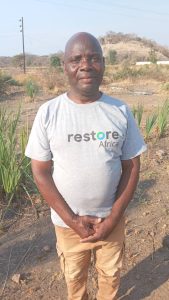
Local leaders agree. Village Headman Mkudawachete notes that for years the open canals were destroyed by floods, goats, and cattle.
“Now, they are being replaced with new pipes,” he says, gesturing toward the site. “We will also have stronger cement tanks, a fenced scheme, and a new engine pump. This will protect our 18-hectare scheme. Nine hectares are already under rehabilitation, but the rest will follow soon.”
Chairperson of the Boadzulu farmers’ committee, Eliza Msuku, paints a picture of women’s resilience:
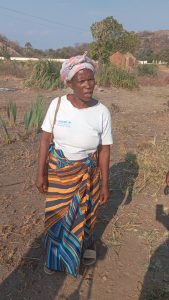
“With climate change, rains are not as reliable as before. This scheme and the trainings we receive like modern stoves, tree planting, and box-ridge construction help us cope. Over K129 million has been invested, and in five years, we hope to see real change. Not just in food security, but also in protecting our environment,” says Msuku beaming with hope.
“Some days I joke with the other women, saying we’re half farmers, half acrobats, balancing seedlings and buckets,” she laughs. “But it’s serious work. If we don’t do it, no one else will,” concludes Msuku.
The forest factor
Agriculture and environment go hand in hand. Forest Assistant in the area, Takondwa Garnett, says LIFE-AR also empowers families to protect nature.
“Over 10,000 trees are being planted in Mangochi,” Garnett says, “alongside flood-risk control works. By the end of five years, this area won’t just be food secure; it will be greener, cleaner, and maybe even attract eco-tourism.”
Policy anchors
The Ang’ona project supports Malawi’s National Resilience Strategy (2018–2030), which prioritises irrigation and catchment restoration to break the cycle of hunger. It also feeds into Malawi 2063, which calls for agriculture commercialisation and climate-smart infrastructure, and aligns with the African Union’s Agenda 2063 on climate resilience.
Across Africa, agriculture policies increasingly stress climate-smart farming, irrigation expansion, and farmer empowerment. The African Union’s Comprehensive Africa Agriculture Development Programme (CAADP) sets clear targets for sustainable agriculture, increased investment, and food security. Many African countries now include irrigation, drought-resistant crops, and ecosystem restoration in national development plans.
Projects like Ang’ona reflect this continental vision, showing that local initiatives, when aligned with broader policy frameworks, can help farmers withstand climate shocks and boost productivity.
Challenges and courage
The journey is not without obstacles. Withdrawal of US funding earlier this year left gaps, and rising costs of materials strain the budget. But Mangochi leaders are determined, and farmers like Mariam Issah stay hopeful.
“Sometimes it feels like everything is against us,” Issah admits, “but we keep trying. Every seedling counts.”
A future secured
For Issah, the scheme is more than concrete canals and solar pumps. It is the chance to keep her children fed and her daughter in school.
“If the scheme works, I will have food for my children,” Issah says, touching the young rice plants, “and maybe I can send my daughter to secondary school. I want her to study, so she doesn’t suffer like me.”
Her youngest, three-year-old Chikondi, tugs at her skirt. “Mama, when will our rice grow big?” he asks. Issah smiles. “Soon, my child. Soon we will eat well again.”
As Village Headman Mkudawachete puts it:
“Akakonza ma canal komanso kuika ma paipi atsopano mavuto athu achepa.”
(“Once they finish with the pipes, our challenges will be reduced.”)
For Mangochi, for Malawi, Ang’ona is proof that from devastation can come renewal if communities, government, and global partners pull together.
#MBCDigital
#Manthu
