


By Justin Mkweu
Illovo Sugar Malawi commands a large share of Malawi’s sugar market through its product, from which it makes billions of money in profits.
In the 2024/25 financial year, the company made a profit after tax of K77.8 billion, which was a 241 percent growth from the preceding year.
Apart from making such profits, the company is one of the top tax payers in the country as evidenced by a K75 billion payout made to government last year.
It is not always a bed of roses, however, as each year, the company suffers from natural catastrophes emanating from climatic shocks.
Its board chairperson Jimmy Lipunga admits that climate change has heavily affected their operations.
“It used to be a once off thing. Flooding used to happen once in three or four years but it has now become an annual challenge so it has become a problem because it means our cane is being disrupted, we have to start crushing cane late, therefore it affects our capacity to produce,” Lipunga adds.

Climate change rapidly drives biodiversity loss by forcing species to migrate, disrupting ecosystems and altering habitats.
While issues of climate change are inevitable, biodiversity experts believe the companies have themselves to blame for sluggish funding towards biodiversity conservation and management, which mitigates these climate change shocks.
For example, in its 2025 financial year, Illovo Sugar Malawi indicated that it was aligning its climate strategy with ABF Sugar’s SBTi-validated targets, which commit the group to achieving net-zero greenhouse gas emissions across the value chain by 2050.
It further said the targets guide the company’s transition planning, investment priorities and operational innovations.
However, despite all the ambitions and the catastrophes the company faces due to climate change, its 2025 annual report indicated that it had committed only 6 percent of its planned capital expenditure to support climate change strategy and ESG initiatives.
Another notable entity is Press Corporation Limited, whose profit after tax grew by 68 percent to K126.3 billion during the 2024 financial year.
The group’s environmental performance shows that it has invested billions in affluent management, water management, renewable energy and carbon management among others to protect biodiversity.
For example, it says it has invested K22 billion in zero discharge systems and $22 million in clean energy through solar power.
Even though the group says it has invested that much, footprints of environmental pollution through its subsidiaries such as PressCane are all over the place.
In February this year, PressCane was fined K40 million for polluting the environment near Dyeratu Trading Centre in Chikwawa District.
On January 26, the Malawi Environmental Protection Authority (MEPA) closed the PressCane factory after its untreated waste scorched plants in surrounding areas.
Press Corporation and Illovo Sugar Malawi are just a few examples of companies that biodiversity experts believe should pump in more resources to conserve and protect biodiversity from climate shocks.
In an interview with MBC Digital, Ministry of Natural Resources Chief Environmental Officer Biswick Mlaviwa points out that Malawi needs $100 million (approximately K175 billion) per year to conserve and protect the environment.
He decries, however, that while government is doing its part, the private sector is lagging behind in financing biodiversity.
“In terms of mobilizing resources for biodiversity, the private sector has not been adequately participating,” Mlaviwa adds.
The Ministry of Finance, Economic Planning, and Decentralization shares a similar concern.
The ministry’s Deputy Director of Economic Affairs Lionel Mchenga is hopeful that the private sector will be roped into biodiversity financing through a framework which they have developed, which has some carrots dangled.
“We are trying to incorporate the private sector to fund various activities that can mitigate disasters therefore we will put a framework that will make sure that private sector is willing to come in,” Mchenga says.
Experts paint a gloomy picture of the biodiversity future in Malawi if private sector financing continues to be on the lower side.
Regional Coordinator for Biodiversity Financing in Africa, Bruno Mweta, believes the environmental risks are huge and that the consequences on businesses will be severe if companies do not come in quickly and handy.
“The private sector is dependent on biodiversity. I talked about water linking to the agriculture sector, so if they do not take care of biodiversity, the businesses will be affected in what we call nature related financial risks,” Mweta explains.
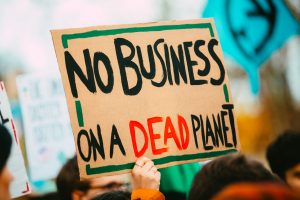
Malawi is not immune to threats that climate change poses on biodiversity, as evidenced by natural calamities that the country has faced such as storms, floods and cyclones.
It is therefore clear that if the private sector continues to shun from financing biodiversity, the country would fail to cope.
The private sector therefore needs to quickly come in and pump more money to protect the environment.
