


In the late morning heat of Manasi village in Chitipa, 58-year-old Lusekelo Zovu sits under a mango tree and recalls a time when childhood illness carried fear, superstition and silence.
When a child develops fever at night, rash, convulsions or high temperature, families often did not speak of the disease. They spoke instead of spirits, curses or bad luck.
Measles outbreaks once left entire homesteads in mourning. Some children died before their first birthday and in many villages, such deaths were quietly accepted as fate.
“We did not know those spirits had names like tetanus or polio, we only knew some babies would not survive,” Zovu says as she remembers remembers when child death was common and unspoken. Now she sees mothers lining up for vaccines and volunteers moving from house to house with purpose.
Today, that language of resignation is beginning to shift.
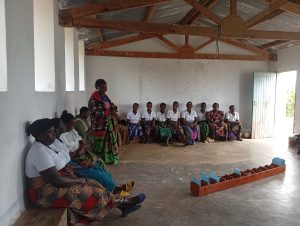
The transformation is being driven by community-based volunteers known as Mother Care Groups (MCGs), trained under the Malawi Health Equity Network (MHEN) and supported through the Health System and Immunisation Strengthening Project backed by Gavi, the Vaccine Alliance.
Across Chitipa’s hard-to-reach areas including Misuku, Therere and Mubanga, MCG volunteers now move door to door identifying pregnancies, tracking newborns and checking child health passports to ensure immunisation schedules are followed.
Unlike earlier decades when health outreach was largely facility-based, the model now relies on community surveillance and peer mobilisation.
Mutogha MCG chairperson Chriness Msukwa says attitudes have changed.
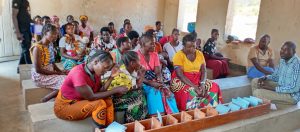
“Culture and religion once kept people away from vaccines but now communities understand. Immunisation is no longer feared,” she said.
Each group, often made up of around 30 women and supported by a traditional leader, is tasked with ensuring no mother or child is left unaccounted for in the vaccination system.
In some areas under Traditional Authority Wavikaza, MCG members still confront myths and misinformation about vaccines, though open resistance has declined.
Volunteers say engagement with churches and local leaders has been key. However, health workers caution that acceptance is not universal and varies by village and denomination, particularly in remote settlements where access to health information remains limited.
Despite improved uptake, geography continues to shape health outcomes.
Some mothers in Chitipa still walk up to 15 kilometres to reach the nearest health facility. During the rainy season, rivers overflow and roads become impassable, cutting off entire communities.
A missed clinic day can mean a missed vaccine dose.
District health officials acknowledge that these access gaps historically contributed to outbreaks of diseases such as measles and neonatal tetanus in underserved areas.
Health Surveillance Assistant Elias Ng’ambi says this community linkage has strengthened outreach effectiveness.
“These volunteers connect the community to the health system, when they mobilise, we see results in attendance and immunisation uptake,” he said.
MHEN assistant programme officer Mphatso Kamangira says immunisation coverage has improved significantly, though she cautions that figures vary by catchment area and reporting cycle.
“Coverage has reached about 88 percent in some zones,” she says. “We are also seeing a reduction in preventable childhood illnesses, but the challenge is maintaining consistency across all hard-to-reach areas.” she said.
Independent district health officials confirm increased demand for vaccines, though they note persistent logistical constraints, including supply distribution and staffing shortages in remote health centres.
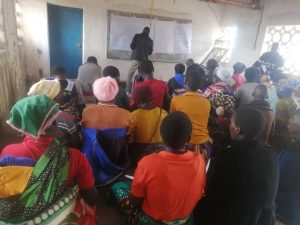
District Environmental Health Officer Ojohn Mpoha says demand for services is rising alongside awareness. “We are seeing more people coming for immunisation and maternal services,” he says. “But the challenge remains infrastructure and distance,” he said.
For volunteers like Aggness Mfungwe of Chiwanga MCG in Kameme, the work is personal as she walks long distances across steep terrain to check on mothers and children, often under difficult conditions.
“I do this so no parent feels the pain our mothers felt,” she says. “A child should not die because of distance or myths.”
While Chitipa’s experience shows measurable progress in immunisation uptake and community engagement, health experts caution that sustainability remains an open question.
The programme relies heavily on unpaid volunteers and external funding support through global partners such as Gavi.
Since 2019, around 30 MCGs have been established in Chitipa under the Gavi-supported programme implemented through MHEN.
By Joseph Mbughi.
