


By Barbara Mwandira, Mana
At around 05:00hrs every morning when the sky is still dark and the atmosphere cold, Collins Makinero leaves Kachipeya Village in Ntcheu with his minibus heading to Lizulu Market.
For years, the stretch between Lizulu and Kachipeya has always left him wondering how much damage would every trip cause to his minibus, owing to countless potholes scattered on the road?
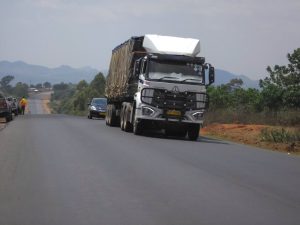
That has always been the question every driver, along the M001 road lived with for years: The road, which links Malawi’s two cities. Blantyre and Lilongwe, had fallen into so much disrepair that a journey of roughly 4 hours could stretch to 6 hours or more.
For Makinero, damages and repairs to his minibus suspension due to lack of maintenance of the M001 Road had always meant continuous dwindling of his weekly income.
“Driving on this road has always been hectic over the past years; Weve lost a lot of money and our earnings due to the potholes which damaged our vehicles, causing an economic struggle,” bemoaned Makinero in an interview.
But now the minibus driver, and other users of the M001 Road can heave a sigh of relief as the noise of heavy machinery and construction plants can be heard as rehabilitation works take shape at various sections of the backbone road.

“The maintenance of the road is timely. At least we will be able to service the vehicles within the required period — and not because they have been damaged by poor condition of the road,” said Makinero.
The Roads Fund Administration (RFA) recently announced that the M001 Road is undergoing sectional maintenance and rehabilitation from Bunda Turn-Off in Lilongwe to Kameza Round About in Blantyre.
According to RFA Public Relations Manager, Masauko Ngwaluko, progress on the maintenance and rehabilitation of the sections, which include Masasa-Kachipeya, is upbeat.
“The M001 is critical road network infrastructure connecting major commercial and agricultural areas in Malawi. Therefore, it is vital that we repair this road to make it easier for trade and commerce, and to also reduce transport costs and allow the community ease access to markets,” said Ngwaluko.
“Toll fees and steady fuel Levy inflows are resulting in maintenance of public roads,” he added.
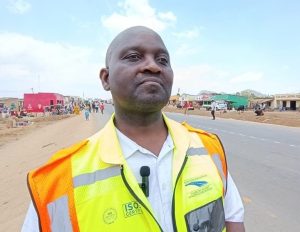
The progress on the rehabilitation and maintenance works on the M001 is noticed and acknowledged by small-scale business people, including vegetable vendor, Chimwemwe Phiri, from Lizulu Market.
She said traveling on the section to Lizulu was unbearable, with no alternative route to use to get to the market.
“I had no choice but to go to the market to sell my produce despite the poor condition of the M001 Road,” Phiri said, and she continued: “Now that they are rehabilitating the road, the journey will be much easier and faster. I am very happy for that.”
Phiri and Makineros sentiments illustrate how poor road conditions can increase the cost of travelling and cause difficulties in utilizing economic opportunities.
This impacts motorists, farmers, traders, patients and the entire community.
A Tyre fitter at Lizulu Market, Gregory Richard, attests to frequent tyre punctures that he has had to handle due to the poor condition of the road.

“Of course, it was a good business for Tyre fitting, the tyre punctures kept us busy, but its commendable that the safety of road users is now a priority,” he said.
“And it was risky and dangerous for pregnant women and other patients to travel along this road to hospital” he added.
The sectional maintenance works of the road includes sealing of potholes, shoulders reconditioning and asphalt resealing on some sections, according to Acting Chief Maintenance Engineer at Roads Authority, Derrick Manda.
So far, 4.4km of the 9.56km targeted section of the Masasa-Kachipeya has been resealed and, according to Manda, the repairs have been funded through toll fees and fuel levy.” Manda explained.
RFA Finance Manager, James Dzonzi, said K2.19 billion was collected from tollgates, between July to September 2026, an increase of 75 percent as compared to K1.27 billion during the same period in 2025.
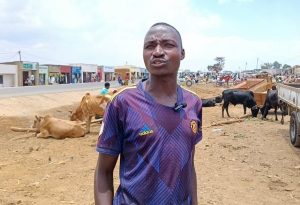
Dzonzi described fuel Levy as an important source of funding in ensuring public roads are built, maintained and repaired.
Between April to October 2026, Malawi Energy Regulatory Authority (MERA), resumed remittances of fuel Levy after a long break.
During the same period, MERA paid K96.4 billion from the K300 billion that it owed RFA in arrears from fuel levy.
RFA Board Chairperson, Noel Mkulichi, is optimistic that the Administration will succeed in exploring other local financing mechanisms for the Kameza interchange project.
“We have done the same with Lilongwe interchange so why not Kameza. We are certain that the bond financing mechanisms will materialise,” said Mkulichi.
He added: “The rehabilitation of the road is providing relief to the road users and, also as Roads Fund, we are geared towards a sustained road network across the Country.”
The developments on the Lizulu section and the source of funds have made Makinero, the minibus driver. reflect on his earlier perception and change his mindset towards toll fees.
“I used to complain when paying toll fees but, now, seeing the fruits of a good road maintenance has totally changed my thinking. The M001 Road must be reliable for drivers, as well as all road users; farmers, patients, families and traders said Makinero.
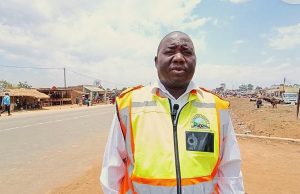
“Travelling from Blantyre to Lilongwe normally takes approximately four hours but it could take six hours due to the road condition. At least seeing the machinery on some sections of the crucial is a relief indeed,” concluded Makinero.
As he starts the engine, the road ahead is smooth and the journey is shorter. For the first time in years, the biggest question of the day is no longer about loss. The machinery on the sections of the M001 looks promising for the rest of the road progress.
It is, now, about how much Makinero will be saving as he plies his business on the Lizulu- Masasa stretch
