


In the densely packed location of Mtsiliza on the outskirts of Lilongwe’s suburbs, dawn does not arrive with urgency. It settles slowly through faint light on both tin roofs and grass thatched houses, the shuffle of footsteps, and the quiet testing of taps that may or may not respond.
For Agness Phiri, also known as Onaphi among her peers, the morning begins long before the city stirs. She lifts a bucket and steps into the cool air to a nearest piped water point, guided more by habit than certainty. Water, when it comes, arrives on its own terms.
“You just go and hope,” she says. “Some days you find it. Most days, you don’t.”
When the tap runs dry, everything shifts. Cooking is delayed. Plans are rearranged. Children leave for school without bathing, their routines cut short. In homes like hers, water is not simply a service, it dictates the rhythm of daily life.
Yet beyond these narrow paths of Mtsiliza, another reality unfolds, one measured not in buckets, but in vast volumes of treated water lost before it ever reaches households.
At a policy level, the scale of the problem is stark.
Ministry of Agriculture, Irrigation and Water Development Principal Secretary responsible for Water Development Henry Manford Njoloma says inefficiencies within the system continue to drive losses across the country.
“The main challenge is the failure of meters to record readings, pipeline network breaks and other issues,” he says, noting that non-revenue water (NRW) or water that is produced but not billed due to leaks, theft, or metering failures ranges between 26 and 46 percent among utilities.
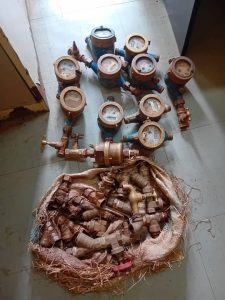
That figure already exceeds the global benchmark of 25 percent. But national averages tell only part of the story.
An investigation by this publication shows that Blantyre Water Board records the highest levels of NRW in Malawi, with rates fluctuating between approximately 50 and 52 percent.resulting in substantial revenue losses. Lilongwe Water Board ranks second, with NRW estimated between 35.8 and 40.5 percent.
According to the Government Annual Economic Report (2025), Malawi’s water sector recorded an average of 35.3 percent NRW in 2024, translating into losses of between K66 billion and K70 billion.
The consequences extend far beyond financial statements. They are systemic and deeply felt.
Under the Water Resources Act 2013, institutions are mandated to ensure efficient management, equitable access, and sustainable use of water resources. The framework sets the standard. The reality, however, often falls short.
Water Services Association of Malawi Executive Director Vitumbiko Mkandawire says the impact of these losses reverberates across the entire system.
“When that much water is lost, it affects supply, finances, and the ability of water boards to maintain infrastructure,” he says. “It becomes a cycle that is difficult to break.”
“That cycle feeds on itself. When revenue is lost, maintenance suffers. When maintenance suffers, losses increase,” Mkandawire adds.
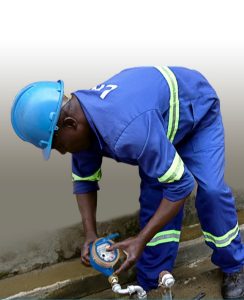
In Mtsiliza, the consequences play out quietly but persistently.
Onaphi speaks of mornings that stretch into uncertainty, where time is spent waiting rather than working.
“Sometimes we have to buy water,” she says. “And it is expensive.”
For many households, the cost of these inefficiencies is paid in small, daily sacrifices, money diverted to purchase water from shops at a higher price, time lost, dignity compromised.
Financial expert Brian Kampanje says the scale of losses is steadily eroding the sector’s capacity to grow.
“Water boards are losing billions of Kwacha every year,” he says. “Instead of expanding infrastructure, they are covering losses. That slows progress.”
Government says it is working to address the challenge but the tone is hardening.
Following an inspection of Blantyre Water Board earlier this year, Minister of Agriculture, Irrigation and Water Development Roza Fatch Mbilizi took a firm stance on the scale of losses.
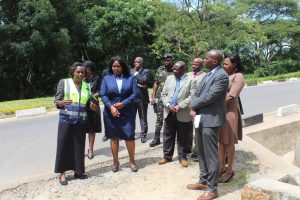
“We cannot continue losing nearly half of the water we produce while asking Malawians to pay more,” she says.
“This is not a tariff problem.it is a failure of management, accountability, and systems. If these losses are not urgently reduced, then those responsible must step aside for those who can deliver.”
The issue is not only technical, it is human.
Health rights activist Maziko Matemba says inconsistent access to water has direct consequences for sanitation and public health.
“When communities do not have reliable water, sanitation is compromised,” Matemba says, adding: “And when sanitation is compromised, health risks increase.”
He calls for stronger cooperation between government, communities, and institutions to address the issue at its roots.
The crisis sits at the intersection of policy commitments.
Malawi’s long-term vision under Malawi 2063 prioritises sustainable development and reliable service delivery. Globally, the Sustainable Development Goals call for universal access to clean water and sanitation.
Yet for many communities, those commitments remain distant.
There are, however, signs of progress.
Lilongwe Water Board acting chief executive officer MacLenan Nyang’wa says reforms are beginning to yield results.
“We have reduced NRW from over 40 percent to around 32 percent,” Nyang’wa says. “It shows that progress is possible.”
Support from international partners has helped sustain that momentum.
Japan International Cooperation Agency Malawi chief representative Tanaka Yukinari says capacity building remains central to long-term solutions.
“We are committed to supporting efforts that strengthen water management systems,” Yukinari says.
Back in Mtsiliza, such progress is not yet fully felt.
Onaphi stands by the tap, waiting, listening, hoping.
“You cannot plan your day,” she says. “You just wait and see what happens.”
And so the waiting continues.
Because while billions of litres are lost within the system, the true cost is measured elsewhere: in disrupted mornings, in quiet sacrifices, and in the enduring expectation that water should flow when it is needed most.
#MBCDigital
#Manthu
