
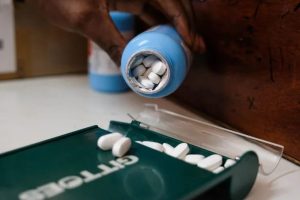
At first glance, the parcel looks harmless, just another package loaded onto a bus heading to South Africa. But hidden beneath clothes and groceries are Malawi’s life-saving antiretroviral (ARV) drugs, quietly slipping across borders and into the hands of black-market dealers.
Despite ongoing government efforts to tighten control over public medicines, investigation by #MBCDigital revealed that ARV smuggling from Malawi to South Africa remains active, driven by desperation, fear and profit.
Although South Africa provides free ARV treatment through public health facilities, undocumented migrants living with HIV reportedly avoid hospitals and clinics for fear of arrest, deportation or discrimination. To make it worse, the recent wave of xenophobic attacks has deepened that fear, creating a growing underground demand for the medication.
Posing as a potential buyer based in Johannesburg, MBC Digital contacted several Malawian dealers allegedly operating in South Africa.
Within hours, individuals claiming to have access to different ARV brands and quantities responded.
One of them, identified only as Jane (not her real name), admitted that she regularly trades in ARVs and other medicines smuggled from Malawi.
“I have various kinds… which ones do you want… let me tell my supplier,” she said in the conversation.
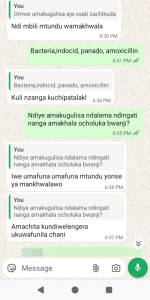
Jane said she built connections with suppliers while working for a health-related NGO in Nsanje and now receives the drugs through transporters travelling between Malawi and South Africa.
According to Jane, the spate of xenophobic unrest often increase business as undocumented migrants become more desperate to access treatment outside formal health facilities.
Transporters are also helping sustain the illegal trade.
A transporter based in Blantyre, contacted by this reporter while posing as a customer, readily agreed to move five bottles of ARVs to South Africa for R500 which is about K100,000.
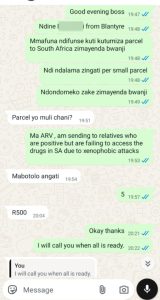
He said no paperwork would be required because the medicines would simply be hidden among ordinary goods.
Health rights advocates have since expressed concern that weak controls within the public health system could be enabling the leakages.
Malawi Health Equity Network (MHEN) Executive Director George Jobe described the situation as alarming and called for stricter monitoring of medicine supplies in public hospitals.
“The government needs to establish where the leakages are taking place, especially in public health facilities,” he said.
While concurring with Jobe, Health and Rights Education Programme Executive Director Maziko Matemba said Malawi must strengthen cooperation with neighbouring countries to combat cross-border medicine trafficking.
“It is important for Malawi and South Africa to work together in reducing drug smuggling,” he said.
Minister of Health and Sanitation Madalitso Baloyi said authorities are strengthening stock management systems, documentation and accountability measures in hospitals to curb theft and illegal distribution of medicines.
Baloyi has repeatedly warned that government will not spare any health worker found aiding and abetting medicine theft or smuggling.
Mwanza Police spokesperson Hope Kasakula said authorities are relying on intelligence from communities to detect smuggling attempts at Mwanza Border Post.
In the 2026/27 National Budget, government has allocated K1.02 trillion to the health sector, including K1 billion for ARV procurement with additional support from the Global Fund.
Malawi is estimated to have nearly one million people living with HIV, many of whom rely on consistent access to ARV treatment through the public health system.
By Alufisha Fischer
