


By Justin Mkweu
Emanyareni is an area in the outskirts of Mzimba District under Traditional Authority Mabulabo, which appears to be cut off from the realities of the real world.
The area has no running water, no quality roads and, among many others, no electricity within or somewhere nearby.
For people to access services that require electricity, they have to travel long distances to places such as Chisemphere in neighbouring Kasungu District or to Nkhamenya in the same district.
This, according to 53-year-old Zione Chirwa, renders it almost impossible for people such as the elderly or children to access the services, and if they really have to, they end up spending a lot of money.
“Transport right now is K20,000 on a bike to and from Nkhamenya. Imagine spending K20,000 just to have a K3,000 haircut.
“For a phone, you need to have one with a strong battery and use it sparingly so that it can last two weeks or more,” Chirwa complained.
Emanyareni is but a single sand on the beach of areas whose dwellers have never had a taste of electricity or products that rely on electricity.
The country has a body which is responsible for the connection of electricity in the country called Electricity Supply Corporation of Malawi (Escom).
The electricity distributor has indicated that each year they put aside a lot of billions of kwacha to go towards new electricity connections.
Delivering the 2026/27 national budget in Parliament in February this year, Minister of Finance, Economic Planning and Decentralisation, Joseph Mwanamvekha, said in the energy sector, the government has significantly expanded electricity access across the country.
“Through the Malawi Rural Electrification Programme (MAREP) and the Malawi Electricity Access Project (MEAP), over 186,000 households have been connected to power,” Mwanamvekha said.
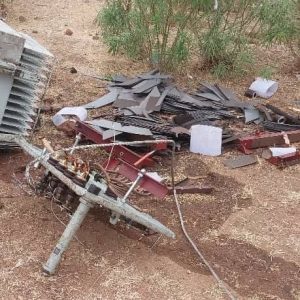
However, areas such as Emanyareni still remain in the dark despite such efforts and while resources are scarce, vandalism of Escom property is among the top reasons that has kept areas like Emanyareni in the dark.
Escom Chief Public Relations Officer Pilirani Phiri said the electricity provider spends over K3 billion per year replacing or rehabilitating vandalised property such as transformers, electricity poles and power cables.
Phiri says this has a lot of setbacks on Escom, which includes inability to effectively implement its new connections strategies.
“Vandalism has hit us hard as criminal syndicates target essential equipment such as copper and transformer oil. These illegal acts disrupt our operation by diverting scarce resources away from new connections towards the constant replacement of stolen infrastructure, which in turn leads to prolonged blackouts for our customers,” he said.
According to data sourced by MBC, average connection fee per customer is K1.4 million.
This means that with over K3 billion, Escom can be able to connect approximately 2, 500 households in areas such as Emanyareni.

Police acknowledge the problem of vandalism of Escom property, saying arrests have been made so far.
South West Region Police spokesperson, Beatrice Mikuwa, believes if the public can join hands with the police in reporting cases of vandalism of Escom property, the vice can be reduced.
“We are appealing to the public to help us in this fight because such fights are sophisticated and need collaboration and they should know that if they will not be helping us, the effects will continue affecting them,” Mikuwa said.
It is clear, vandals are robbing communities of a necessity of their lives and they need to be stopped.
In an increasingly digital world, electricity powers communities and without it, meaningful development cannot be achieved.
