


Sports analysts say Mighty Wanderers became the champions of the 2025 TNM Super League through their recent structural improvements and determination; more than any team in the campaign.
They amassed 69 points from 30 matches, recording nine draws and suffering just a single defeat—a narrow 2–1 loss to Mzuzu City Hammers on 3 December 2025 at Mzuzu Stadium.
The title was sealed on 20 December, when they thumped Moyale Barracks 6–0 at Kamuzu Stadium in Blantyre with a game to spare, their biggest victory of the season and a fitting coronation.
The points haul equalled their 2017 title-winning campaign when they also finished on 69 points from 30 games, winning 21, drawing six and losing three.
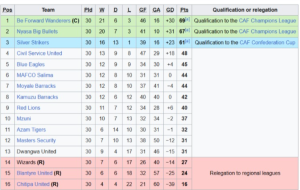
Statistically, however, the 2025 season stands out among the club’s title records.

Comparisons inevitably return to the near-perfect campaigns of the past: last season, they were second with 58 points, 17 wins, 7 draws and 6 defeats.


The other time they came the closest was in 2000–01, when Wanderers finished second with 66 points without losing a match but were held back by nine draws; and 1997–98, another runners-up finish marked by just one defeat, five draws and 65 points.
One of Wanderers’ defining highlights was reasserting dominance over their cross-town rivals, FCB Nyasa Big Bullets.
They edged Bullets 1–0 on 31 May 2025 through Blessings Mwalilino’s 12th-minute strike, before delivering a commanding 3–0 victory on 26 October 2025, sparked by Wallace Adam’s 22nd-minute opener and sealed by Blessings Singini’s late brace in the 76th and 83rd minutes.

It was a feat last achieved in the 2011/12 season, when Wanderers won both league meetings 2–1.
Despite beating Bullets home and away, they failed to replicate the same with another title contender, Silver Strikers, as they played a 1-1 draw at home on 25 May, 2025 and a 2-2 stalemate at Silver Stadium on 22 November.
Early in the season, Wanderers technical panel roped in MacDonald ‘Nginde’ Mtetemera from Creck Sporting Club to be the Assistant Coach and also signed Promise Kamwendo on a three-year deal as a free agent following the expiry of his contract with Dedza Dynamos.
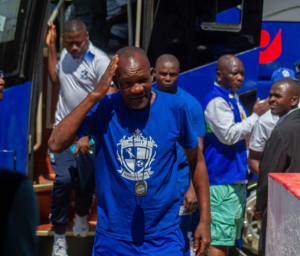
These acquisitions proved decisive.
The team went nearly unbeaten, and the attacker scored nine league goals to finish as the club’s top scorer and fourth overall in the TNM Super League.
Kamwendo was ably supported by midfielder Blessings Mwalilino, who contributed eight goals while goalkeeper Dalitso Khungwa anchored a solid defensive unit with 17 clean sheets.

Sports analyst Dan Chemis credited the club’s structural improvements following the arrival of Thom Mpinganjira as president, saying they laid the foundation for success.
“His motivation of players should also be considered, and even the signing of Kamwendo has been critical. The player has been scoring important goals in important matches, of course, other players too have contributed very much,” Chemis said.
Club President Mpinganjira cited the hard work and determination of both players and the technical team.
Head Coach Bob Mpinganjira insisted the title was deserved.
“It is something we have been working on during training. We played good football this season, and we worked very hard,” he said.
Football Association of Malawi (FAM) President Fleetwood Haiya echoed similar sentiments, describing Wanderers’ campaign as one defined by consistency and resilience.
Chemis further observed that the championship carried emotional weight, serving as a tribute to their Technical Director and former coach Yasin “Titch” Osman and legendary striker Esau “Black Mamba” Kanyenda—both part of the club’s last title-winning side in 2017.
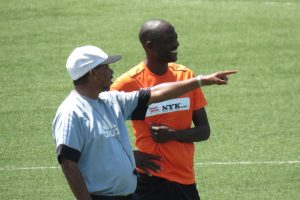
FCB Nyasa Big Bullets’ 2025 campaign was initially promised renewal under head coach Peter Mponda, who arrived with a pedigree after winning the 2024 league title with Silver Strikers.

Bullets made an early statement, going six games unbeaten between 5 April and 24 May 2025—a run that mirrored Silver Strikers’ own title-defining streak from 27 April to 2 June 2024.
Bullets won more matches than any other team (21), scoring 60 goals while conceding just 20. They collected 66 points, lost 6 times and drew only 3, the least stalemates in the league.
In 2024, Bullets finished third with 55 points after registering 14 wins, 13 draws, and three defeats.
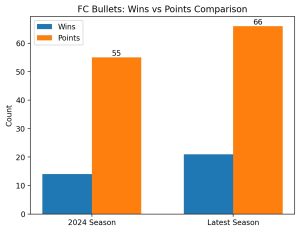
With just one match remaining, Mponda was dismissed, assistant coach Gilbert Chirwa stepping in as interim, as Bullets settled for second place on 66 points.
Former Bullets coach and player, Kinnah Phiri, said the dismissal was early since the team improved from last season and also noted that the league was very competitive.

“Bullets offloaded a lot of important players like Lloyd ‘Banega’ Aaron. As a result, the coach (Mponda) started building with upcoming players, mostly from the reserves. I think they should have started where they left off last season,” Phiri said.
In defence, the team sold their full backs, Alick Lungu to Ekhaya and Precious Sambani to Silver Strikers. There was also a contract termination of their Midfielder, Ronald Chitiyo and Centre Back, Clyde Senaji. While Gomegzani Chirwa and Nickson Nyasulu left the club following the expiry of their contracts.
Strikers Babatunde Adepoju, loaned from South Africa’s Venda Academy two seasons earlier, and Chikumbutso Salima finished as joint top scorers with 15 goals apiece.

Their understanding was best illustrated in the comeback victory over Songwe Border United on 27 August 2025. Briefly unsettled by Kelvin Nyondo’s 40th-minute, Bullets responded with urgency and precision. Adepoju levelled four minutes later, struck two minutes again after the restart, and Salima sealed the turnaround with a decisive finish in the 61st minute.
(Above: Part of Bullets v Songwe 2-1 game. Courtesy of NBB Media)
At their best, Bullets looked unplayable.
The 7–0 demolition of Songwe Border United at Kamuzu Stadium on 20 April 2025 stood as the most emphatic statement of intent.
It was reinforced by a 4–0 thrashing of Mzuzu City Hammers on 27 December 2025, another 4–0 win against Kamuzu Barracks, a 4–1 victory over Creck Sporting Club early in the season, and a series of authoritative 3–0 wins against MAFCO, Moyale Barracks, Chitipa United and Dedza Dynamos.
They were outclassed 3–0 by eventual champions Mighty Wanderers and edged out again 1–0 by the same opponents on 31 May 2025.
Further setbacks followed in 2–0 defeats to Moyale Barracks on 10 December and Creck Sporting Club on 30 November 2025, as well as a 2–1 loss to Civil Service United on 12 July 2025.
On 10 August 2025, Bullets surrendered a commanding 3–1 lead against Karonga United, conceding late to settle for a 3–3 draw.
Even at Kamuzu Stadium, certainty was elusive.
A frantic 4–3 victory over Civil Service United on 23 November required a Salima hat-trick to avert embarrassment, while a 2–1 win over Silver Strikers on 5 October came only after Bullets recovered from Andrew Joseph’s 66th-minute opener, with Ephraim Kondowe and Hassan Kajoke scoring within 14 minutes to rescue the points.
Off the pitch, instability mirrored the inconsistency on it.
The fallout with assistant coach Fischer Kondowe, who was released on 12 November 2025, reinforced the sense of a technical bench struggling to settle under sustained pressure.

In parallel, the club pursued longer-term structural fixes, partnering with England-based SK Academy to enhance coaching expertise across all teams, with Dan Quigley and David Ramjee conducting sessions in Blantyre.
The club’s Chief Executive Officer, Albert Chigoga, had earlier insisted that Mponda would be afforded time to build and stabilise the team; however, this did not go as planned.
In third place were Silver Strikers.
The 2024 champions finished the season on 64 points from 18 wins, 10 draws, and just two defeats (second least of the season) and only three points shy of last season’s title-winning haul of 67.
Below is how they fared on the table this season
P W D L GF GA GD Pts
30 18 10 2 50 18 +32 64
Below is how they fared on the table last season
P W D L GF GA GD Pts
30 19 10 1 58 17 +41 67
The campaign began unevenly, marked by a 1–0 opening-day defeat to FCB Nyasa Big Bullets and a 2–2 draw against Chitipa United.
Yet Silver steadily recovered and, by season’s end, stood as the league’s second least defeated side.
Even so, the numbers hinted at subtle regression: 50 goals scored and 18 conceded in 2025, compared to 58 scored and 17 conceded during their championship campaign.
Change had come before a ball was kicked.
Following the departure of Peter Mponda, the club promoted Peter Mgangira to head coach, assisted by Etson Kadenge Mwafulirwa and Mapopa Msukwa, as the Central Bankers sought continuity rather than overhaul.

Individually, quality was evident, even if it did not always translate decisively in the league.
Silver strengthened across departments, bringing in full-back Precious Sambani from Bullets, forwards Emmanuel Allan and Sam Ademeyi, and midfielders Felix Demakude and Festus Duwe.
Mid-season signing Andrew Joseph also played a key role in several top-flight matches.
Allan emerged as the most effective addition, scoring eight league goals to finish fourth on the scoring charts.
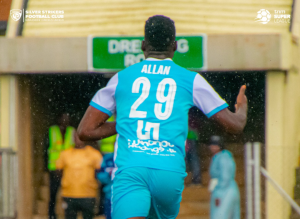
His standout moment came on 27 November 2025, when he struck a hat-trick against former side Moyale Barracks in a 3–0 win.
Midfielder Chinsinsi Maonga also contributed significantly, finishing the season with seven goals.
At their best, Silver were emphatic.
A 6–0 demolition of Songwe Border United on 7 December was followed by a 4–1 win over the same opponents earlier in the season.
They also recorded commanding 3–0 victories over Dedza Dynamos and Moyale Barracks, and 3–1 wins against Ekhaya and Karonga United.
Yet the title slipped away in quieter moments.
On 14 December 2025, a 1–1 draw against Karonga United proved costly, opening the door for both Bullets and eventual champions Mighty Wanderers to pull clear at the summit.

Assistant coach Mapopa Msukwa acknowledged the shortfall while looking ahead.
“It is true we have failed to defend the title and all is good; we did well, but things turned out differently,” he said.
Sports analyst Kim Kamau pointed to the early-season technical adjustments as decisive.
“It took time for the coaches and players to gel. In the first round, they dropped a lot of points, but in the second round they collected more—actually better than Wanderers and Bullets,” Kamau said.

In fourth place were Blue Eagles—a club that, not long ago, had been wrestling with the humiliation of relegation.
Blue Eagles amassed 48 points from 13 wins, nine draws and eight defeats.
The improvement was stark when set against their previous top-flight campaign in 2023, when they managed just 35 points from eight wins, 11 draws and 11 losses and were relegated.
Their return campaign, however, was not without turbulence.

Blue Eagles began the season on a low note, opening with a 3–1 defeat to Wanderers on 6 April.
A week later, they briefly steadied themselves with a 4–1 victory over Songwe Border United, but consistency proved elusive.
Over the next six matches, they collected just nine points, despite recording their most emphatic win of the campaign — a 6–1 thrashing of Mzuzu City Hammers on 24 May.
Further setbacks followed, including a 2–0 defeat to CIVO at Nankhaka.
By 31 May, the team sat fourth on the table amid growing uncertainty. It was at this point that head coach Eliyah Kananji, who had guided the Eagles back to the Super League, resigned and departed for Creck Sporting Club a few days later.

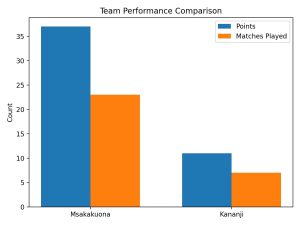
His exit paved the way for the return of former coach De Klerk Msakakuona, who took charge of the remaining 23 matches.
Msakakuona’s tenure began with a goalless draw against Ekhaya on 31 May.
His standout moment came on 27 June, when Blue Eagles stunned Big Bullets with a 1–0 victory.
A week later, however, they suffered a 3–1 defeat to Kamuzu Barracks, followed by narrow 1–0 losses to Chitipa United and Dedza Dynamos, as well as 3–1 defeats to CIVO and Wanderers on 22 October.

Crucially, after a loss on 23 November to Moyale Barracks, Blue Eagles did not taste defeat again for the remainder of the season.
In total, Msakakuona collected 37 points from 23 matches, while Kananji had secured 11 points from seven games.
Sports analyst Sylvester Watson Makhale said Blue Eagles’ strong finish was no accident.
“It is not a coincidence that they finished where they did. The coach instantly understood the team’s chemistry,” Makhale said.

Fifth place once again belonged to Civil Service United, a side whose recent seasons have been defined more by consistency than momentum.
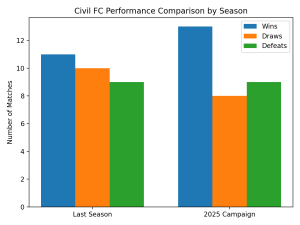
The Lilongwe-based outfit finished the 2025 campaign with 47 points from 13 wins, eight draws, and nine defeats, scoring 39 goals and conceding 21.
Their league position was anchored by strong home form, where they registered eight wins, four draws and just three losses.
Away from home, however, the limitations were clearer, with only five wins, four draws and six defeats on the road.
While their position in the standings remained unchanged, the underlying numbers pointed to gradual progress.
Civil collected 43 points last season from 11 wins, 10 draws and nine defeats—already an improvement on 2023, when they finished sixth with just 30 points.
Civil made a sluggish start, collecting only 10 points from their first 10 matches. What followed, however, was one of the league’s most sustained mid-season surges.
The revival began with a 2–1 victory over FCB Nyasa Big Bullets on 12 July and gathered momentum through emphatic results, including a 5–0 demolition of Songwe Border United and a 4–0 triumph over Mzuzu City Hammers. Over the next 11 matches, Civil collected 29 points, briefly emerging as one of the division’s form teams.

That momentum eventually stalled.
Narrow defeats to Chitipa United, Bullets and Mafco, followed by losses to Silver Strikers and eventual champions Mighty Wanderers, exposed familiar inconsistencies that prevented a sustained push into the top four.
Even so, Civil closed the season in commanding fashion, punctuating their campaign with another emphatic 5–0 victory over Songwe Border United.
Head coach Abbas Makawa expressed belief in his squad, particularly players recruited at the start of the season, saying he expects improved cohesion as the club targets a top-four finish next term.
Makawa also acknowledged that departures disrupted the team’s rhythm, citing the exit of Festus Duwe to Silver Strikers, Masiya Manda to Mighty Wanderers and Chifundo Ngapemba to FCB Nyasa Big Bullets.

“From 2024 to 2025, some key players moved to other teams and we failed to find like-for-like replacements immediately. Those we recruited needed time to adapt, and that explains our struggles in the opening matches,” Makawa said.
Sports journalist Austin Katunga noted that Makawa’s emphasis on defensive structure yielded clear dividends, pointing to a reduction in goals conceded compared to the previous season.

“We have to give credit to players like Chakaiko Batison, Boston Kabango, Peter Ng’ambi, Damiano Kunje and Righteous Banda. Their experience helped stabilise the team and maintain fifth place in a very competitive league,” Katunga said.
Sixth place belonged to Karonga United, whose 2025 campaign quietly marked a return to relevance.

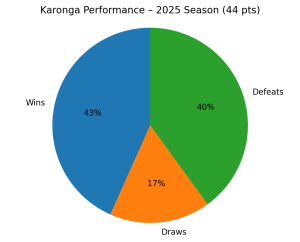
They finished the season with 44 points from 13 wins, five draws and 12 defeats—statistically their second-best league finish since 2018.
Only the 2020–21 campaign stands taller in their recent history, when they placed fifth with 46 points after recording 12 wins, 10 draws and eight defeats.
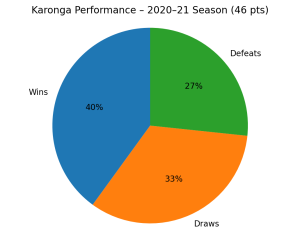
The 2025 performance also represented tangible progress from the previous season.
In 2024, Karonga ended seventh on 42 points, having won 11 matches, drawn nine and lost ten.
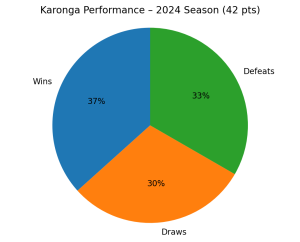
After peaking in 2020–21, Karonga struggled to sustain momentum, finishing 11th in 2022 with 32 points from eight wins, eight draws and 11 defeats, before rising to ninth in 2023 with 37 points after securing nine wins and 10 draws.
This season, Karonga United may be remembered as a stumbling block to the title contenders—Nyasa Big Bullets and Mighty Wanderers.
On 29 June, they held Wanderers to a 1–1 draw, a result that opened the door for Bullets to move to the summit.
Then, on 10 August, Karonga drew 3–3 with Bullets at Kamuzu Stadium, a dramatic encounter that once again created space for Wanderers to reclaim top spot.
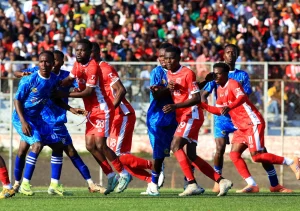
A closer look at the numbers shows a side more comfortable at home, where they registered seven wins, two draws and six defeats. Away from home, they managed six wins, three draws and six defeats—just one result short of matching their home return.
The main concern was defensive solidity on the road, where they conceded 16 goals compared to 12 at home, despite keeping more clean sheets away (six) than at home (five).
In attack, Karonga leaned heavily on Alfred Chizinga, who delivered in key moments.

He scored against Wanderers, found the net in the 3–3 thriller against Bullets, and also grabbed the equaliser in the 1–1 draw with Silver Strikers on 14 December.
Head coach Oscar Kaunda attributed their season to the competitiveness of the league, noting that Karonga proved capable of troubling any opponent, home or away, regardless of stature.
Seventh place went to Ekhaya FC, the league’s newest entrants, whose debut top-flight campaign blended early promise with the harsh lessons of a long season.
The newcomers finished on 42 points from 13 wins, three draws and 14 defeats—an impressive return for a side playing in the top flight for the first time.

Their survival was largely built at home, where they recorded nine wins, one draw and five defeats, scoring 23 goals and conceding just nine.
Away from home, the learning curve was steeper: four wins, two draws and nine defeats, with 19 goals conceded.
Ekhaya began the season with striking confidence.
Back-to-back victories over established sides Tigers (1–0) and Civil Service United (2–1) announced their arrival, while emphatic wins—most notably the 4–1 demolition of fellow rookies Songwe Border United on 4 October and a 3–0 triumph over Mzuzu City Hammers—highlighted their attacking potential.
Yet the season unfolded in sharply contrasting phases.
Ekhaya collected 20 points from their first 10 matches, positioning themselves comfortably in mid-table.
The second half told a different story. In their final 10 games, they managed just seven points and endured a run of six consecutive defeats
Head coach Enos Chatama, appointed at the start of the season from FCB Nyasa Big Bullets Reserves, maintained that survival—not spectacle—had always been the primary objective.
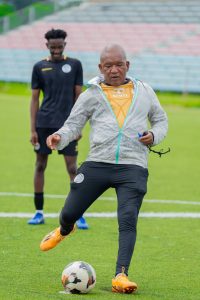
“The main goal was to remain in the league,” Chatama said.
Individually, Ekhaya leaned heavily on forward Clever Chikwata, their leading scorer with six goals.

In goal, Eliasi Missi registered four clean sheets before his stint was cut short following his departure from the club, after which Joshua Waka, signed from Blue Eagles, assumed the role.
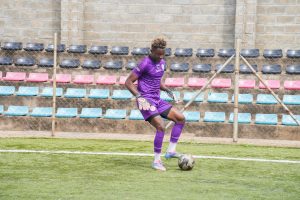
Defensive reinforcement came early in the season with the acquisition of Alick Lungu from FCB Nyasa Big Bullets, while winger Lewa Nkosi arrived from Songwe Border United.
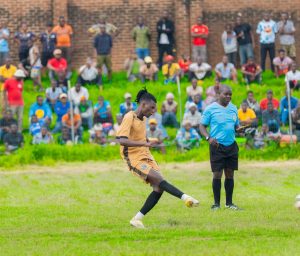
The club later confirmed the departures of Chimwemwe Yassin and Mwai Banda in September.
Just below them, in eighth place, sat Creck Sporting Club—separated from Ekhaya not by points, but by an inferior goal difference as they also finished the season on 42 points.
Last season, the club had ended sixth with the same points total after registering 10 wins, 12 draws, and eight defeats, which might be dubbed as respectable for a side that was then navigating its debut top-flight season.
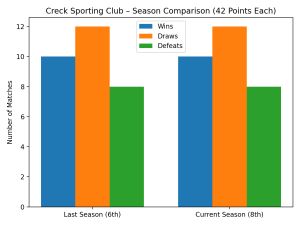
In 2025, their campaign was shaped by a pronounced home-away contrast.
At Aubrey Dimba Stadium, Creck were largely solid, recording eight wins, four draws and just three defeats. Away from home, however, consistency proved elusive, with only three wins, five draws and seven losses.
The season began harshly, with back-to-back 4–1 defeats to Dedza Dynamos and FCB Nyasa Big Bullets. It took a goalless draw against Blue Eagles for Creck to register their first point, before a narrow 1–0 victory over Tigers delivered their maiden win of the campaign.
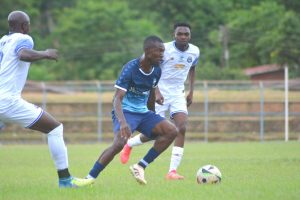
Those early setbacks weighed heavily on their standings.
From their opening 10 matches, Creck collected just 11 points. This made the management of the team to sack their entire technical panel, which was led by Joseph Kamwendo, Abel Mkandawire and Chiukepo Msowoya.
Later, they hired Kananji, who left Eagles following his resignation.
Kananji then led the team to a stronger second-half response, yielding 17 points from the final 10 games and reflecting improved cohesion and belief.
That late resurgence included their biggest win of the season, a 4–2 dismantling of Ekhaya, and one of their most memorable results, a 2–0 victory over FCB Nyasa Big Bullets on 30 November at Aubrey Dimba Stadium. This was also their first time defeating the People’s Team. But that was their only win against a top-three side.
9th and 10th positions were occupied by Moyale Barracks and Kamuzu Barracks—two teams separated by just a single point.
Moyale Barracks finished ninth on 40 points, narrowly edging Kamuzu Barracks, who settled for tenth with 39. It was a slight improvement for Moyale, who had ended last season in eighth place on 39 points.
At home, the soldiers were resilient, collecting six wins, seven draws and just two defeats, scoring 18 goals and conceding 12. On the road, Moyale managed only four wins and three draws against eight defeats, scoring 10 goals while conceding 28—numbers that repeatedly dragged them back into mid-table territory.
The season began with promise.
In their opening 10 matches, Moyale collected 13 points, opening with back-to-back 1–0 victories over Songwe Border United and Kamuzu Barracks.

That early optimism was tempered by a heavy 3–0 defeat to FCB Nyasa Big Bullets, a result they would later avenge with a disciplined 2–0 victory on 10 December.
The closing stretch proved equally mixed.
Moyale picked up 17 points from their final 10 matches, but the run exposed both resilience and vulnerability.
While they remained competitive, they suffered their heaviest defeat of the campaign—a 6–0 dismantling by eventual champions Mighty Wanderers—and endured further 3–0 losses to Silver Strikers and Civil Service United. Notably, they failed to score more than two goals in any of their last 10 outings, underlining persistent attacking limitations.
Head coach Prichard Mwansa admitted the campaign fell short of expectations, revealing that the team had targeted a top-five finish.

He added that the closing stages were particularly troubling, describing the performances in the final two matches—against Mighty Wanderers and Dedza Dynamos, the latter ending goalless—as levels he had never previously witnessed from his players.
Just below them, Kamuzu Barracks mirrored much of Moyale’s inconsistency, finishing tenth with 39 points from 11 wins, six draws and 13 defeats.

Like their military counterparts, Kamuzu Barracks were stronger at home, where they recorded seven wins, four draws and four defeats.
Away from home, the struggles were more pronounced, managing just four wins, two draws and nine losses.
For the second consecutive season, Kamuzu Barracks remained in tenth place—though the marginal rise from 37 points last season to 39 this year reflected modest progress.
Their campaign leaned heavily on the goals of striker Zeliati Nkhoma, who struck 13 times to finish joint second on the league’s scoring charts behind Babatunde Adepoju and Chikumbutso Salima, who both netted 15.

Midfielder Francis Mchema also played a key role, contributing seven goals.
Kamuzu Barracks collected 11 points from their opening 10 matches, a period that included some of their heaviest defeats—a 4–0 loss to FCB Nyasa Big Bullets on 24 May and a 3–0 defeat to Mighty Wanderers on 15 June. Yet there were early signs of promise, notably a commanding 3–1 victory over Mzuzu City Hammers.
The final 10 matches brought similar returns, yielding 10 points.
Highlights included a spirited 2–2 draw against Mighty Wanderers on the final day of the season, as well as narrow 1–0 victories over Mzuzu City Hammers, Karonga United and Creck Sporting Club.
However, the campaign ended on a sour note, with heavy defeats to Ekhaya (3–0 on 22 October) and Blue Eagles (3–1) a week before the league concluded.
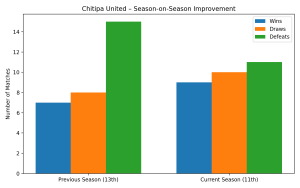
On 11th place were Chitipa United, who finished the season with 37 points from nine wins, 10 draws and 11 defeats. It marked a clear improvement from the previous campaign, when they collected 29 points—seven wins, eight draws and 15 defeats—to finish 13th, surviving relegation only on goal difference ahead of FOMO.
Their 2025 season was shaped by an unexpected ability to frustrate title contenders, particularly in the first round.
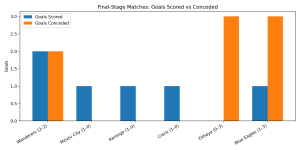
Chitipa opened with a resilient 2–2 draw against Silver Strikers on 12 April, before holding Mighty Wanderers twice—1–1 on 2 August and 0–0 on 30 November—results that briefly disrupted both sides’ early claims to supremacy.

They were beaten by Bullets both home and away, losing 2–0 on 23 August and 3–0 on 18 May, while heavy defeats also came against KB on 1 November and Ekhaya FC on 22 November, both by three-goal margins. A 3–1 loss to Blue Eagles on 7 December further underlined their struggles against teams in stronger form.
Their standout performance of the season came on 25 June, when they produced a commanding 4–0 outclassing of Songwe Border United.
Overall, Chitipa United’s season reflected measurable progress, even if inconsistency continued to prevent a genuine push into the top half.
12th and 13th: Dedza Dynamos and MAFCO
Positions 12 and 13 were occupied by Dedza Dynamos and MAFCO, two sides separated by a single point. Dynamos finished 12th with 32 points, while MAFCO settled one place below with 31.
Dedza Dynamos
Focusing first on Dedza Dynamos, the side registered eight wins, 10 draws and 14 defeats over the course of the campaign. Of their eight victories, only three were collected away from home, with the remaining five coming on home soil—an imbalance that ultimately limited their progress.

The season began on a high note, as Dynamos dismantled Creck Sporting 4–1 at Aubrey Dimba Stadium on 6 April.
That encouraging start was short-lived, however, as they were edged 1–0 by Mzuzu City Hammers before suffering a further setback a week later in a 2–0 defeat to Tigers.
They briefly steadied themselves with a 2–0 win over Chitipa United, only to slip back into losing ways with a narrow 1–0 loss to FCB Nyasa Big Bullets on 14 May.
Their most punishing defeat followed just four days later, when they were thrashed 4–0 by Karonga United.
In attack, Dynamos relied heavily on Luke Chima, who scored four goals during the season.

His standout moment came on 23 November, when he registered a hat-trick against Songwe Border United.
Chifuniro Mpinganjira also finished with four goals, his best performance coming on 31 May 2025, when he helped Dynamos secure a 2–2 draw against Kamuzu Barracks.

Dedza collected 13 points from their opening 10 matches. Over the final 10 games of the campaign, beginning on 19 October, they picked up 11 points, reflecting a slight dip in momentum.
In 2024, they finished 11th with the same points tally of 32, having recorded seven wins, 15 draws and eight defeats.
Off the pitch, a significant development came on 8 October 2025, when the club entered into a K2 billion partnership with Goshen City.
This agreement saw the club renamed Goshen City Dedza Dynamos and was followed by the acquisition of free agent Misheck Botoman.
The club’s Chief Administration Officer, Gaston Kankosi Banda, expressed optimism that the partnership would help transform the team’s fortunes.

“In football, when there is money, success is also there. The sponsorship gave us too much energy and we see it possible to win the league in the next two years,” Banda said.
Before the start of the season, Dynamos had released striker Promise Kamwendo, who later signed for Mighty Wanderers, and also parted ways with their previous head coach, Andrew Bunya.
MAFCO
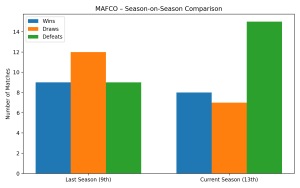
MAFCO finished 13th with 31 points after recording eight wins, seven draws and 15 defeats.
This represented a downturn from last season, when they finished ninth with 39 points, following nine wins, 12 draws and nine defeats.
Their heaviest defeat of the campaign came on 19 April 2025, when they were beaten 4–0 by Kamuzu Barracks.
Conversely, their standout victory was a 3–1 win over Songwe Border United on 27 July 2025.
Offensively, the Malawi Defence Force–sponsored outfit relied heavily on China Chirwa, who scored eight goals across the season, finishing as the league’s fourth-highest scorer.

Midway through the campaign, the team received a financial boost of K10 million from Champion Stadium owner King Msayiwale Kabvina, intended to support the club’s management operations.
“These government teams face a lot of hiccups. I believe this will help solve problems that they face,” Kabvina said.
Relegation Zone: Mzuzu City Hammers (14th)
Mzuzu City Hammers were relegated to the National Division after competing in the top flight since the 2020/21 season.
The starkest aspect of their demotion was the contrast with last season, when they finished fourth with 48 points, suffering just eight defeats and recording nine draws.
This season, they managed only 28 points from seven wins, six draws and a staggering 15 defeats.
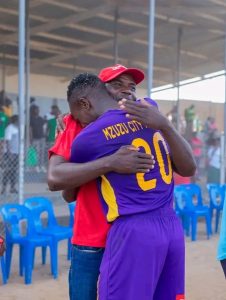
A major factor in their decline was the departure of several key players ahead of the campaign. These included Blessings Singini, who joined Mighty Wanderers last season; Wongani Lungu and Chikumbutso Henderson, who signed for FCB Nyasa Big Bullets; and Isaac Msiska, who moved to Creck Sporting, among others.
The club’s patron, Gift Mkandawire, has previously stated that this player movement forms part of a broader strategy to act as a conduit for talent from the Northern Region to bigger clubs.
Despite their relegation, Hammers did enjoy moments of resistance.
They handed Mighty Wanderers their first defeat of the season with a 2–1 victory and produced their best performance in a 3–0 win over Songwe Border United on 19 November.
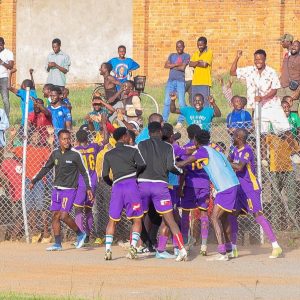
Their lowest point came on 24 May at Nankhaka Stadium, where they were thumped 6–1 by Blue Eagles.
Mighty Tigers (15th)
Even more painful was the relegation of Mighty Tigers, who dropped out of the top tier for the first time since the club’s formation in 1980.
Tigers are former champions, having lifted the title in 1989, and were runners-up in 1986, the inaugural season of the Super League of Malawi.
Their relegation followed a season in which they managed just six wins—the second-fewest in the league—alongside nine draws and 15 defeats.
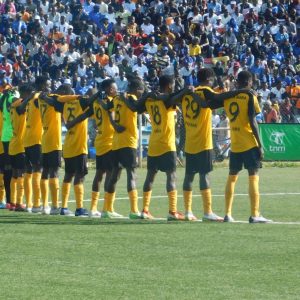
The campaign was largely grim, though their best result was a 2–0 win over Dedza Dynamos on 21 April. Aside from that, and two narrow 3–2 defeats to Mighty Wanderers and Chitipa United on 6 April and 13 April respectively, these were their only high-scoring matches. Their heaviest defeat was a 3–0 loss to Wanderers on 26 November.
Head coach Trevor Kajawa described the relegation as deeply painful for the club.
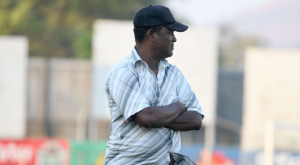
Nonetheless, the Tigers’ struggles had been evident for several seasons.
Last year, they finished 12th with 35 points, while the season before they ended 11th with 36 points, level with Mzuzu City Hammers. In both campaigns, they survived by the narrowest of margins.
In the 2022 season, they finished 12th with 31 points, again just above the drop zone. During the 2020/21 campaign, Tigers placed 13th with 32 points and were spared relegation only by a superior goal difference of minus eight, compared to Chitipa United’s minus 18.
Their exit is particularly significant given that Mighty Tigers are among the founding members of the league in 1986, alongside Bullets, Wanderers, Silver Strikers, Civil Service United and Red Lions—who are set to return to the top flight this coming season.
Songwe Border United: Bottom of the Table
Songwe Border United finished bottom of the league and endured one of the toughest campaigns in recent Super League history.

They collected just six points from a single win and three draws, finishing last in almost every statistical category. The side conceded 77 goals and scored only 10, worse defensively than Baka City, who conceded 74 goals ahead of their return to the league in the 2026 season.
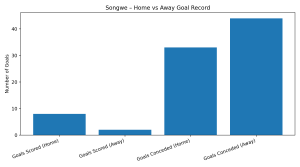
Songwe scored eight goals at home and only two away, conceding 33 times at home and 44 on the road. Their home record stood at one win, two draws and 12 defeats, while away from home they failed to register a single victory, drawing once and losing 14 matches.
The warning signs were evident early.
As rookies, they collected just one point from their opening 10 matches—a 1–1 draw against Mzuzu City Hammers on 11 May. During this period, they also suffered their heaviest defeat, a 7–0 thrashing by FCB Nyasa Big Bullets on 20 April.
Their sole victory came on 15 October, when they edged Chitipa United 1–0, securing their first three points of the season and what would prove to be their best performance.

In the final 10 matches, they picked up a point in a draw against Creck Sporting on 6 November, with their other stalemate being a goalless draw against Tigers on 9 August.
Sports analyst Abdul-Rashid Hakeem Banda attributed Songwe’s struggles to fundamental shortcomings.
“Songwe had a tough season because they had an inadequate attack and a leaky defence,” Banda said.
With just six points, Songwe became the third-lowest scoring team in league history.
Illovo FC remain the worst, having collected a single point in the 2004 season, while Nkhata Bay United managed four points in the 2009/10 campaign.
Coaching instability compounded their problems.
Enoch Mhone, who guided the club to promotion, began the season in charge before being reassigned as assistant coach following the appointment of Christopher Nyambose. Nyambose was later suspended, with Edwin Kaonga stepping in as interim head coach.
Despite relegation, the club remains optimistic.
Technical Director Gift Chilongo insisted the stay in the National Division would be brief.
“We will soon come back into the league because we are losing no player. We will keep the squad so that we win together and return in style,” Chilongo said.
Promotion and League summary
While the return date of the league is yet to be known, three teams have already secured promotion to the TNM Super League.
Red Lions sealed their comeback after being relegated in the 2023 season, while Baka City also return following their 2024 demotion. The only newcomers to the elite division are Mitundu Baptist.
Super League of Malawi president Gilbert Mitawa described the 2025 campaign as successful, competitive and attractive.
“I have to congratulate Wanderers as they have worked hard. The relegation battle went all the way to the wire—that is the status of being a serious league,” Mitawa said.

Financially, the league also recorded a significant boost in gate collections. According to SULOM, total revenue rose to K1,746,033,820, up from K1,073,280,460 in 2024—an increase of 62.68 per cent.
“This is a great improvement. Generating a billion plus like this has never happened before,” Mitawa said.
Ultimately, the 2025 TNM Super League season rewarded stability, punished hesitation and left little room for sentiment, as even historic names were dragged into decline while others rebuilt themselves through structure and patience.

