


By Catherine Alumando
Gladys Naliwa usually walks from Biliwili Village to Mwanza Trading Centre where she sells her merchandise to support her family of five.
Though the 6 kilometre journey is manageable, the state of the path is what troubles her the most.
“The pavement we use is slowly becoming invisible because waste has taken over the area,” she reveals.
As she approaches the market, Naliwa is often greeted by a strong stench and swarms of flies hovering over decomposing waste.
“I worry that I might become a carrier of diseases like cholera. Sometimes the shoes I wear are worn out, so I end up stepping directly on the waste,” she added.
Her experience mirrors that of many other traders.
Clifford Robert, a shoe repairer and seller of farm produce from Mchotseni Village, told MBC Digital that the situation exposes vendors to constant health risks.
“The state of the dumping site is very worrying. It puts us at serious risk of diseases like cholera,” Robert adds.
Although Mwanza is the second smallest district in Malawi, covering just 826 square kilometres, its importance to the country’s economy far outweighs its size.
The district serves as a gateway between Malawi and Mozambique, with traders, transporters and travellers crossing the border daily. Yet, beneath this strategic significance lies an environmental challenge.
Despite hosting one of the district’s busiest commercial hubs, Mwanza Trading Centre lacks a designated waste disposal site. Garbage piles are left scattered in open spaces, some of which double as footpaths for vendors and shoppers making their way to the market.
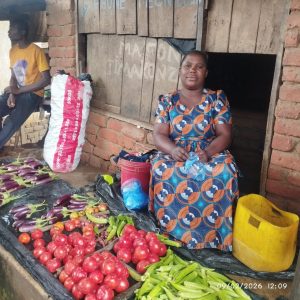
Regina Dimusa, a tomato vendor from Chiwembu Village, says the dumping site also affects traders who depend on food prepared within the market.
“Coming from Chiwembu Village, I cannot go back home for lunch, so I cook here. However, the flies coming from the waste site make the food unsafe,” she says.
She notes that the problem is not limited to those who cook their own meals.
“Even traders who buy food from restaurants are affected, because flies also reach the food, making it unsafe.”
Chairperson for Mwanza Trading Centre, Ganizani Henderson, says the problem is long overdue.
“Last year, we held an interface with officials from Mwanza District Council to tackle this issue,” says Henderson. “Only part of the waste was removed, and since then, nothing else has been done.”
Weighing in on the issue, George Jobe, Executive Director of the Malawi Health Equity Network, says the absence of a formal dumping site in the district increases the risk of infections among people who move in and out of the country through the Mwanza border.
He calls on Mwanza District Council to urgently address the issue, warning that it poses serious health risks, including cholera and diarrhoea, among residents and travellers.
Responding to the concerns, Mwanza District Council spokesperson Brian Wasili admits that the district has never had an official dumping site. However, he says “a new site has been identified in the area of Senior Chief Inkosi Kanduku, and plans are underway to operationalise it.”
The district is currently using a temporary dumping site with a 15-year life span.
Environmental sustainability advocate Mathews Malata warns that the situation in Mwanza cannot be overlooked since the district is “the face” of the country to those entering Malawi through the border.
“Mwanza is the first impression for many people entering Malawi through the border route. It should reflect the country’s environmental commitments, not expose gaps in waste management,” says Malata.
He observes that the lack of official dumping sites is not unique to Mwanza but a widespread challenge affecting nearly all of Malawi’s 28 districts. He calls for immediate intervention from the Ministry of Local Government to support struggling councils.
Malata also challenges district councils to adopt innovative approaches to waste management, including better utilisation of funds collected from vendors and other local revenue streams.
Public Relations Officer for the Ministry of Local Government, Chimwemwe Njoloma, says the ministry has launched a project called “Panyumba panga, m’dera langa, ntawuni yanga, udindo wanga,” aimed at encouraging councils to improve waste management.
“For instance, Minister Ben Phiri mobilised K15 million in Blantyre, which will be used to reward best-performing wards in waste management as a way of motivating councils,” says Njoloma. “The minister is also engaging with a Zimbabwean waste management company, Geo Pomona, which will work with councils to collect waste for sustainable use, including energy production.”
Under Malawi 2063, the country commits to building a clean, safe, and sustainable environment, with improved waste management identified as a key priority for public health, environmental protection, and economic growth.
