


Residents say the polluted water is damaging underground water sources, which they have relied on for decades for crop irrigation and fish farming.
One night in November 2024, Rachel Chasweka’s son began struggling to breathe, a condition that went on for weeks. Fearing for his health, Chasweka and her husband made a difficult decision to send him to their relatives.
Their boy, who suffers from asthma, could no longer stay in their home at 6 Miles in Chimutu village, in the area of Senior Chief Kalumba in Lilongwe. The once-quiet nights had grown heavy with smoke, accompanied by relentless noise and bad smells—disturbances Chasweka says began soon after a plastic recycling factory opened nearby.
“My son had to leave, he was staying at my sister’s house until he went back to school,” she said. “If my child and entire family struggle with these issues, what about the little ones whose parents can’t even afford insecticides?”.
Chasweka, and her husband built their house in 2007 at 6 Miles, a place she says used to be marked by quiet evenings and clean air. Today, however, frustration is now rising like the smoke that drifts daily from a factory belonging to Jing Cheng Plastic Recycling Industries Limited. This company manufactures sacks from plastic materials collected and sold by locals.
A growing community problem
Chasweka’s family is not alone. Across the village, residents say life has changed quickly within a year, with mosquitoes breeding from the contaminated water discharged by the company during its cleaning processes.
The residents claim that the polluted water is damaging underground water sources and a stream in the village, which farmers have relied on for decades for crop irrigation and fish farming.
For Isaac Kazanga, a fish farmer and crop grower, the impact has been devastating. He was shocked early this year when he discovered that the water in the fish ponds was turning red, prompting him to seek intervention from relevant authorities.
Other residents, Fanny Bonongwe and Howard Mwale, claim there was no mosquito problem in the village, but now the situation is worse.
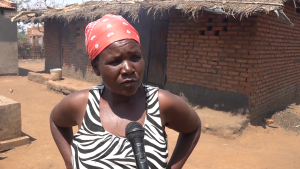
“If you come around 5 PM, you might find a swarm of mosquitoes. Once it gets dark, we lose peace because of the smoke, noise, mosquitoes and bad smell,” said Bonongwe.
Authorities step in
The growing complaints prompted the residents to petition the Malawi Environmental Protection Authority (MEPA) in February to intervene. The following month, MEPA visited the company. According to a letter dated 14 March 2025, addressed to Jing Cheng Plastic Recycling Industry Limited Manager and owner, Fuu Dongyan, MEPA confirmed that the residents’ complaints were valid.
MEPA discovered that there was noise and polluted water contributing to mosquito breeding and disturbing the peace of the residents due to heavy noise pollution, especially from the plastics waste crushing, shredding and melting plant.
“There is no proper smoke collection mechanism from the plastic melting machine, which leads to the presence of bad smell of burnt plastics within the plant,” the letter, titled Compliance Monitoring Inspection for Jing Cheng Plastic Recycling Industries Factory, reads in part. “There is also no waste bunker to store plastic wastes, thereby making the area look filthy like a dump site.”
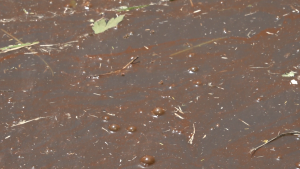
MEPA also condemned the company’s use of three ponds, two for wastewater and one for clean water used in washing plastics, stating that they were unsuitable for storing waste and had become breeding grounds for disease vectors, posing a risk of groundwater pollution.
As a result, MEPA Director Wilfred Kadewa ordered the factory to build a secure storage facility for the materials it buys from locals for processing, and to relocate its machinery by March 25, 2025, to an area away from residential zones.
“The factory should install an effluent treatment plant by 17th April 2025 to prevent breeding of vectors, groundwater pollution and the risk of ponds overflowing with untreated wastewater during the rainy season,” reads the letter.
He also instructed the company to construct a facility to treat and store wastewater that emits odors and attracts mosquitoes and insects, with a deadline of April 17, 2024.
On April 24, 2025, the National Water Resources Authority (NWRA), along with representatives from the Water Quality Service Division in the Ministry of Water and Sanitation, visited the company and tested the water being discharged outside the premises through previously uncovered drainage channels. The on-site investigation and wastewater quality assessment found that the wastewater was polluting the stream and the dam used by Kazanga for fish farming.
NWRA determined that the company was violating Section 92 of the Water Resources Act (2013) for operating without an effluent discharge permit. In a letter dated June 16, 2025, NWRA emphasised that the company’s wastewater contained chemicals, grease, and oil used in its operations.
“Key parameters such as biochemical oxygen demand, dissolved oxygen, Phosphate, suspended solids, and oil and grease were found to be beyond permissible limits, posing a clear risk to the environment and public health,” states NWRA in its findings on the investigation of the water discharge complaint against the company.
Similarly, Lilongwe District Health Office, in its assessment report, called for improved water management practices to reduce contamination, proper wastewater treatment before discharge and routine environmental monitoring and audits to be maintained for compliance by relevant officials.
False hope?
These findings gave way to relief to the community, but now many are bitter and frustrated due to the lack of any noticeable changes. Since February, they have written letters and followed up with MEPA, but no action has materialised.
Lilongwe District Environmental Officer, Tadala Sendezera, claims his office was unaware of the issue. Yet, an assessment report dated 10 March 2025—sourced from the Lilongwe District Health Office (LDHO) and copied to a Mr Mchipa of the Environmental Health Department at Lilongwe City Council and the factory—shows that the District Environmental Office had already inspected the site on 27 February 2025.
LDHO’s Environmental Officer, Paul Chunga, confirmed they later gave the factory 14 days to address community complaints.
“We have the authority to shut down the factory if it fails to fix what we instructed them to correct,” said Chunga.
No environmental assessment
For Kadewa, while Environmental and Social Impact Assessments (ESIAs) are mandatory before projects begin, they are carried out by developers through independent consultants, not by MEPA itself.
“As a regulator, we only coordinate, monitor, supervise and consult with all relevant stakeholders on all activities relating to the utilisation and management of the environment and natural resources,” he said.
Kadewa also confirmed that when Chimutu residents filed their complaint on 7 March, MEPA conducted an inspection that validated their claims. The factory was fined K5 million under the Environment Management Act of 2017 and issued a stop order. Four follow-up inspections were carried out between March and June.
“By early July, the company had complied with the environmental order by actually rectifying the issues identified in the inspections, and they were allowed to resume operations,” said Kadewa.
“The lifting of the stop order did not mean they had a clean bill of health—compliance must be maintained at all times. The community was kept informed throughout, and they were told to report any new lapses.”
When contacted for comment, the factory owner, Dongyan, declined to respond.
Herbert Mwalukomo, Executive Director of the Centre for Environmental Policy and Advocacy (CEPA), warns that its continued operation poses a danger to both people and the environment.
“The fact that the factory is located in proximity to people’s settlements and farming places, that, in itself, is a huge problem,” said Mwalukomo.
He observes that recycling requires strict controls and questions why the facility continues to operate without a clear environmental impact assessment and management plan.
While MEPA and other agencies are considering another inspection, the residents’ biggest concern is the water, which they believe continues to be contaminated by wastewater being discharged from the factory.
Uncertainty
For Kazanga, who worries that his crops remain exposed to chemicals, the uncertainty is unbearable.
“If there had been any change, we—the ones affected—would have been the first to notice,” he said. “We are surprised to hear that there’s been a change when we’re still suffering.”
But questions remain: How was the factory established without an Environmental Impact Assessment? Should such factories be built in residential areas? Who is responsible for ensuring factories are constructed in appropriate locations?
