


For 45-year-old Margaret Chirwa, a resident of Ndirande Township in Malawi’s commercial capital, Blantyre, switching from a biomass stove to an ECOA Char Stove has brought noticeable changes to her household.
Chirwa is among a few people who have experienced first-hand the benefits of using the ECOA Char Stove, particularly in reducing the amount of money spent on fuel.
“Before buying the ECOA Char stove, I used to spend around $3 every day on fuel. Now, I only spend about $1 per day, and I am still able to cook three meals a day,” she said.
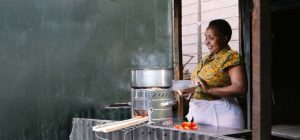
She said the stove has also made a difference to her children’s health.
“I have also noticed a difference in my children’s health. They have stopped having unnecessary coughs because the ECOA Char stove produces much less smoke and carbon compared to the biomass stove I was using before,” she said.
Chirwa shared her experience during a recent visit by a delegation of officials from the Ministry of Natural Resources and Climate Change and officials from BURN, Africa’s leading clean cooking company and one of the world’s largest distributors of clean cooking appliances.
The visit highlighted the connection between carbon finance and real-world impact, from investment in local manufacturing and jobs to the distribution of cleaner cooking solutions and benefits for households.
Earlier, the delegation, led by Deputy Minister of Natural Resources and Climate Change Chipiliro Mpinganjira, visited BURN’s facility in Njuli, Chiradzulu District.
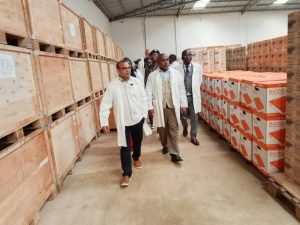
The delegation toured BURN’s operations to see first-hand how local manufacturing and carbon finance are supporting Malawi’s clean cooking and climate ambitions.
Since receiving a Letter of Authorisation on 24 September 2024, BURN has distributed 166,235 clean cooking stoves across Malawi and employed 400 people locally, while establishing manufacturing and distribution operations across the country.
Tim van der Linden, Country Manager for BURN in Malawi, said the company is currently authorised to generate 3.5 million carbon credits from its Malawi clean cooking activities, with the credits eligible under the international CORSIA scheme.
“Malawi has committed to cutting greenhouse gas emissions by 51% by 2040 against a business-as-usual baseline. Delivering on this ambition will require investment in practical climate solutions alongside access to international climate finance.
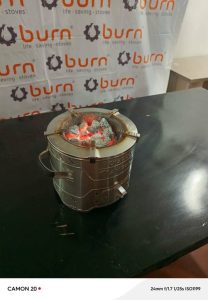
“Our operations in Malawi span multiple clean cooking technologies, with more than 160,000 biomass stoves distributed across Lilongwe, Mwanza and Blantyre, with a portion fitted with digital sensors, while a pilot of electric stoves is underway in Lilongwe and Blantyre,” he said.
The tour underscored the importance of continued collaboration between the Government of Malawi and private-sector partners to strengthen the country’s carbon market, mobilise international climate finance and ensure carbon projects contribute meaningfully to national climate priorities.
As Malawi advances its climate agenda, BURN remains committed to bringing clean cooking to every household in Malawi, with a target of distributing 2 million stoves by 2030, while expanding locally manufactured solutions, growing its national footprint and working alongside government and partners to accelerate climate action at scale.
By Mwai Mtumodzi
