


Inside the sprawling Dzaleka Refugee Camp, where makeshift homes stretch as far as the eye can see, life teeters on the edge of crisis. Designed for just 12,000 people, the camp now groans under the weight of over 57,000 refugees, with new arrivals streaming in from the Democratic Republic of Congo (DRC), Rwanda, Somalia, and other conflict-ridden nations.
Adding to the strain, an estimated 200 to 240 babies are born within the camp each month, further compounding an already dire humanitarian situation.
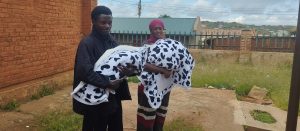
Among the latest additions to this growing population are Hassan and Hussein, newborn twins cradled in the arms of their weary parents. Their father, Mike, stands outside an NBS funds disbursement van, clutching K30,000 he and his wife have just received. He forces a smile, but his voice betrays his anxiety.
“We are happy to have twins it is a blessing. But with WFP fearing it may halt food assistance, we don’t know how we will manage. Life here is already tough, but if food stops coming, then we will be in a big fix and for sure, there will be disorder in this camp,” he says.
A looming catastrophe
For years, the World Food Programme (WFP) has been the backbone of survival for Dzaleka’s residents, providing food or cash assistance to help refugees buy essentials. However, a drastic drop in global donor funding has left WFP with no choice but to reduce refugee rations from 75 percent to 50 percent as of February 2025. Worse still, the agency has warned that if no new funds are secured, cash assistance could be completely halted by May.
“We are in a difficult position,” says WFP’s Interim Country Director in Malawi, Simon Denhere.
“There are competing global needs for funds, and with contributions from our development partners dwindling, we have no choice but to cut rations. If no further funding comes in, we may be forced to withdraw cash assistance entirely by May,” he explains.
For a community that relies almost entirely on aid, this announcement has sent shockwaves through the camp. Joyce Wamuyu, a community leader among the Rwandan refugees, fears the consequences.
“We don’t have farmland. We don’t have jobs. We depend on WFP. If food stops coming, it will bring a lot of trouble to our families, our leadership, and the entire camp,” she laments.
A population boom in a constrained space
The situation is exacerbated by the relentless influx of new asylum seekers, with between 200 and 300 new arrivals entering the camp each month. This has turned Dzaleka into an overcrowded pressure cooker, where resources are stretched beyond breaking point.
Camp Administration Manager, Elton Phulusa, acknowledges the strain.
“The camp was never meant to hold this many people. With the rising population and now the reduction in food aid, we are sitting on a ticking time bomb,” says Phulusa.
Even Deputy Commissioner for Refugees Ivy Chihana admits of the challenges.
“The government would love to step in, but we are also assisting host communities outside the camp. We are not in a position to promise additional support,” concedes Chihana.
Is there a way out?
With WFP’s funding in crisis, alternatives must be explored. One option is investing in livelihood programmes that empower refugees to sustain themselves.
“We need to look at long-term solutions like livelihoods,” says Denhere.
“We are working with UN agencies, development partners, and the Malawi government to see what can be done, but everything requires funding.”
One such initiative, led by Plan International and the Food and Agriculture Organisation (FAO), has trained 150 refugees in modern irrigation farming. While promising, the programme cannot meet the needs of the rapidly growing population at Dzaleka.
Meanwhile, WFP has made an urgent appeal for $10.7 million to restore full rations until December 2025. Whether the funding will come through in time remains uncertain.
An air of uncertainty
As the sun sets over Dzaleka, the camp comes alive with the sounds of children playing oblivious to the storm looming over their fragile world. For parents like Mike, the weight of uncertainty is unbearable.
“Babies will keep being born. More people will keep coming. But if WFP leaves us, then what happens to us?” he asks.
His question hangs in the air, heavy with fear. Without urgent intervention, Dzaleka may soon erupt not just from its swelling numbers, but from the sheer desperation of thousands left to fend for themselves in a place where survival is already a daily struggle.
#MBCDigital
#Manthu


